Satire in Hong Kong: ‘You have to laugh, or you will cry,’ says political cartoonist Harry Harrison
- Satire is regarded as activism, attracting legions of tech-savvy types wishing to make a point
- Artists Arto, Hong Kong Worker and VA Wong Sir recently left Hong Kong, citing limited creative freedom since Beijing’s imposition of national security law
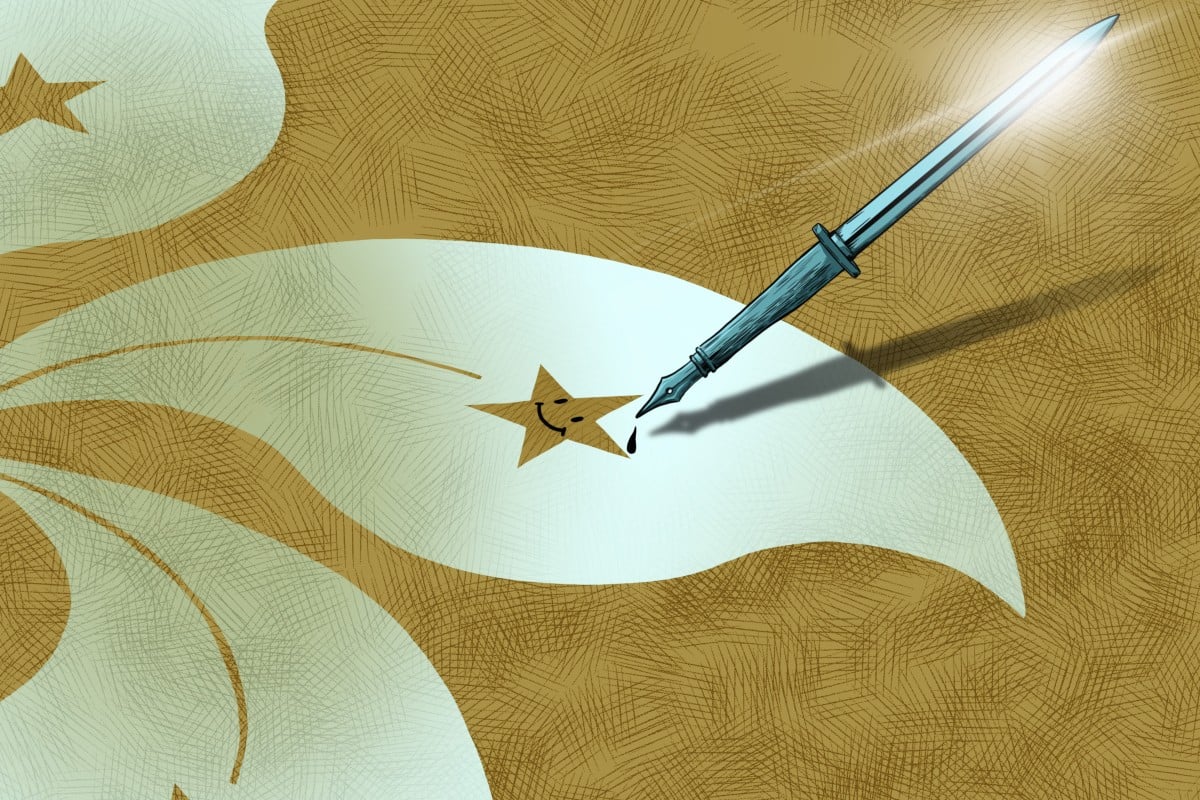
Comedy and caricature are in Harry Harrison’s view, a balm for the pain of reality.
“There is a saying that many a true word is spoken in jest, which I find often holds up. And in many cases, especially now in Hong Kong, you have to laugh, or you will cry,” the award-winning political cartoonist said, summing up the role of satirical works in helping residents cope with the recent volatile years.
For 21 years, Hong Kong-based Harrison has been channelling people’s frustrations into satirical cartoons for the Post in his Harry’s View sketches, which encourage readers to laugh along with his lighthearted thoughts on the city’s news.
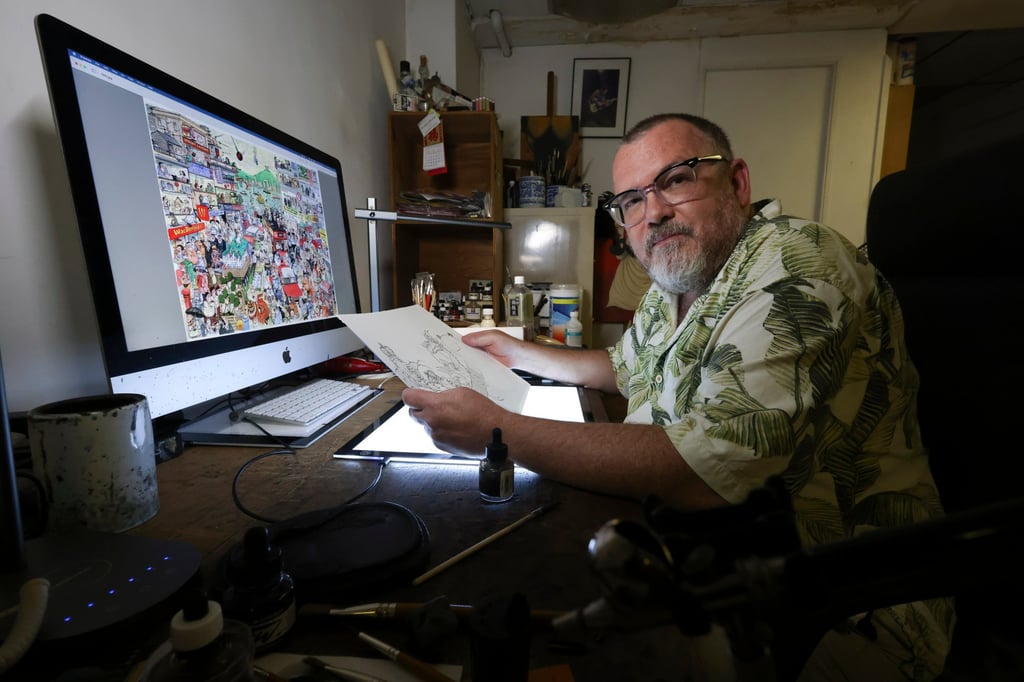
“If I can do something humorous that has a point, I’m happy. I think that’s what most cartoonists strive for,” he said.
Memes, protest props and more
In today’s Hong Kong, satire seems to have become a ubiquitous form of activism. The legions of tech-savvy youngsters never missed a chance to invent internet memes, cartoons, protest props, chants of clever word plays, and derivative works to express views of the Hong Kong and Beijing governments.
In the early 2000s, criticisms of government policies were the main theme of political satire. Famed local cartoonist Zunzi’s portrayals of then leader Tung Chee-hwa and his security minister Regina Ip Lau Suk-yee, nicknamed “Broom Head” for her distinctive hairstyle, have arguably become part of the collective memory of residents. The cartoons came at a time when the government was trying to bring in a controversial national security law.
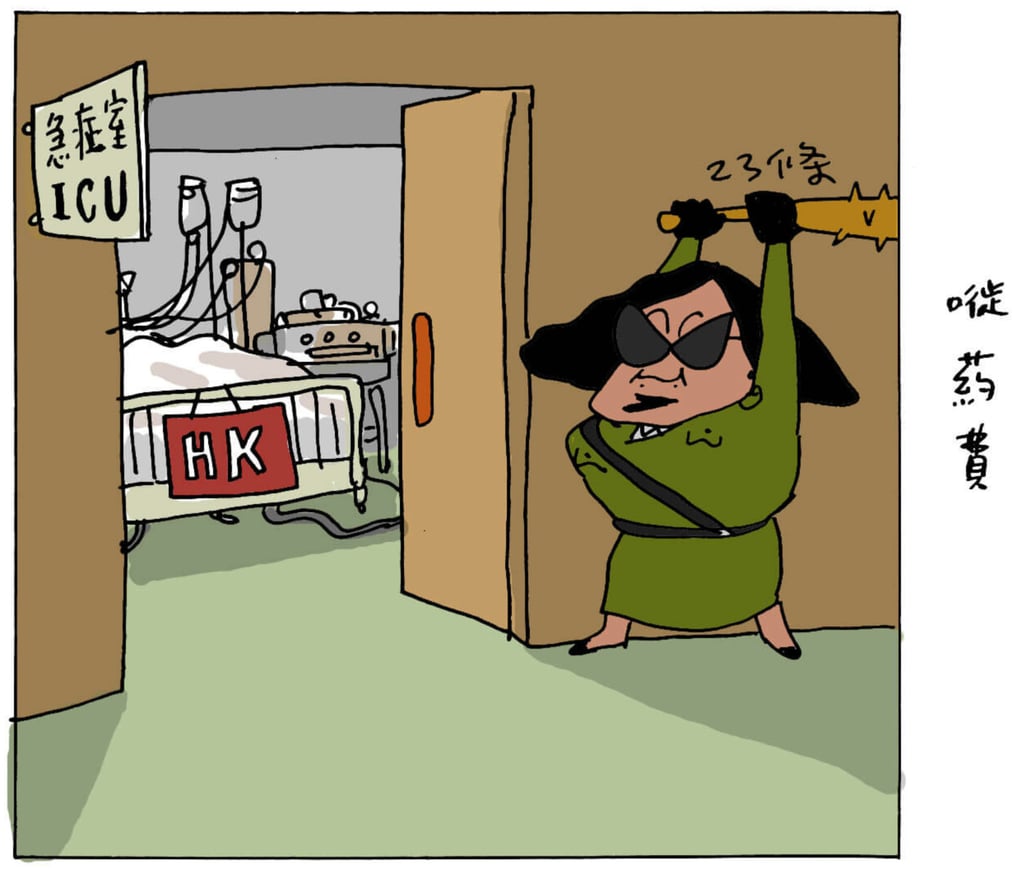
Under Article 23 of the Basic Law, the city’s mini-constitution, Hong Kong is required to enact laws to safeguard national security. Tung’s bid to do so in 2003 was in vain, with an estimated 500,000 people taking to the streets to protest against it.
Chan Wai-keung, a political scientist at Polytechnic University, said: “Traditional political cartoonists like Zunzi usually keep a detached approach to allow them to make their points from a more objective perspective.”