Cracks in first-floor flat hanging above passers-by in Hong Kong spark calls for inspection of nearby structures
- Residents of Man Yuen Building in Jordan say they first noticed cracks on outer wall of first-floor unit that jutted out above the pavement last July
- Supporting structure installed on Friday, Buildings Department says it will follow up with owner on complying with repair order issued in January

Deep cracks running along the outer wall of a flat on the first floor of a residential building in Hong Kong’s Yau Tsim Mong district have prompted residents and an expert to call for an inspection of the structure and seven others nearby, all built a half-century ago.
But the prospect of redevelopment of the area and the financial hardship caused by the Covid-19 pandemic had left many of the owners of the units in the affected building with little desire to undertake costly repairs to their own units, should they also need work, a community worker on Friday said.
The worried residents of Man Yuen Building in Jordan said they first noticed cracks on the outer wall of the first-floor unit that jutted out above the pavement last July, according to Chan Siu-tong of the Business and Professionals Alliance. Chan claimed the owner had done nothing to fix the problem.
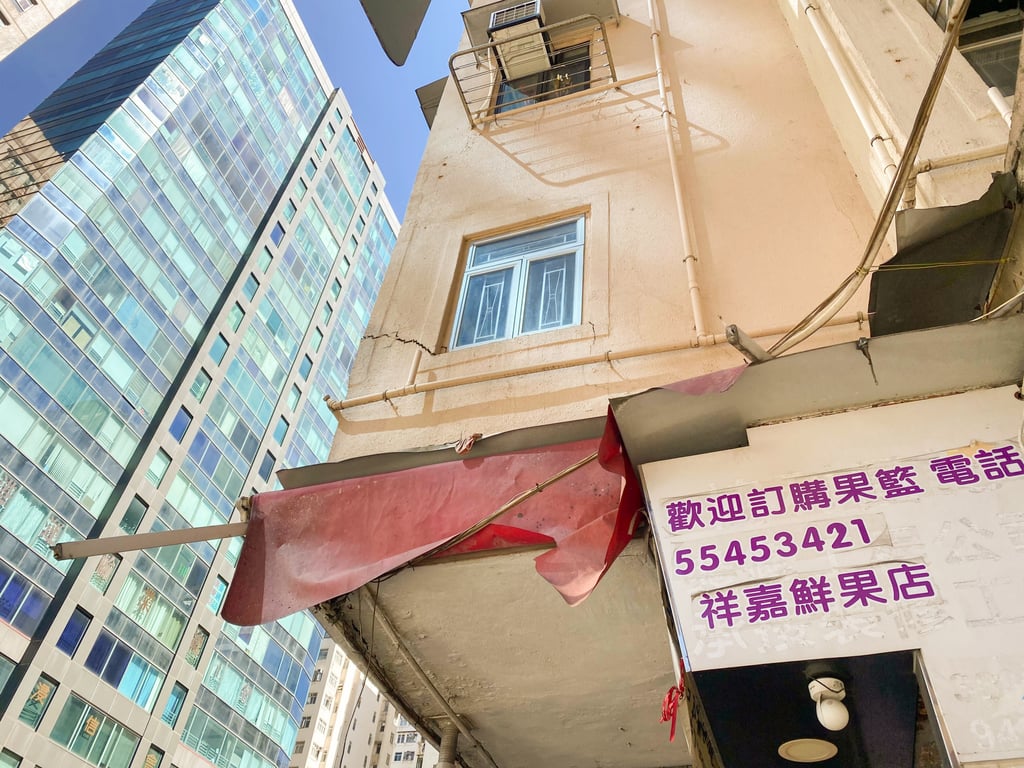
Buildings Department workers installed a supporting structure on Friday, and it said it would follow up with the owner on complying with a repair order issued to it in January.
“We urge the government to tackle this issue as soon as possible so as to make residents feel safe,” Chan said. “We have received a two-digit number of complaints a week on average from residents with various building problems like water seepage, walls peeling and insufficient electricity load.”
The first-floor flat had remained vacant for months even after it was rented out as subdivided units, Chan said.
Man Yuen Building is one of the eight comprising Man Wah Sun Chuen, a private housing cluster at the junction of Jordan Road and Ferry Street built between the 1960s and 1970s, with a total of about 3,200 flats.
Over the years, many of the flats were subdivided into tiny spaces for low-income residents to rent, while some were used as guest houses or for commercial purposes.