Conservation area at 18th century Hong Kong walled village expanded to protect more of historical site from nearby flats development
- Archaeological finds include parts of ceramic neck pillow, inkwell, opium canister, Japanese pottery and ox cart
- Discoveries prompt Urban Renewal Authority to expand conservation park it plans as part of project to build 750 flats by 40 per cent

An excavation of a site where an 18th century walled village once stood in what is now downtown Hong Kong has uncovered tens of thousands of artefacts, including parts of a ceramic neck pillow, an inkwell, an opium canister, Japanese pottery and an ox cart.
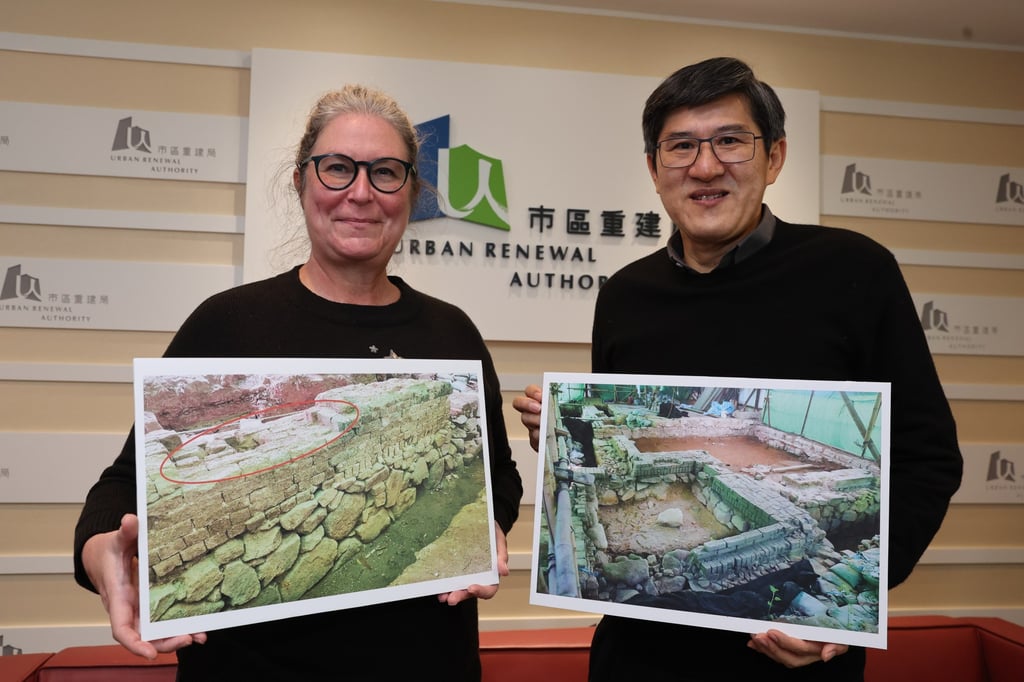
The discoveries have prompted the Urban Renewal Authority (URA) to expand a conservation park it planned as part of a project to build 750 flats by 40 per cent and rethink the original layout of the residential blocks, two experts involved in the work have told the Post.
Nga Tsin Wai Tsuen in Wong Tai Sin was first established about 670 years ago, but was almost completely rebuilt in the 1700s. To protect against pirate raids, the villagers erected walls around the settlement and built watchtowers at each corner.
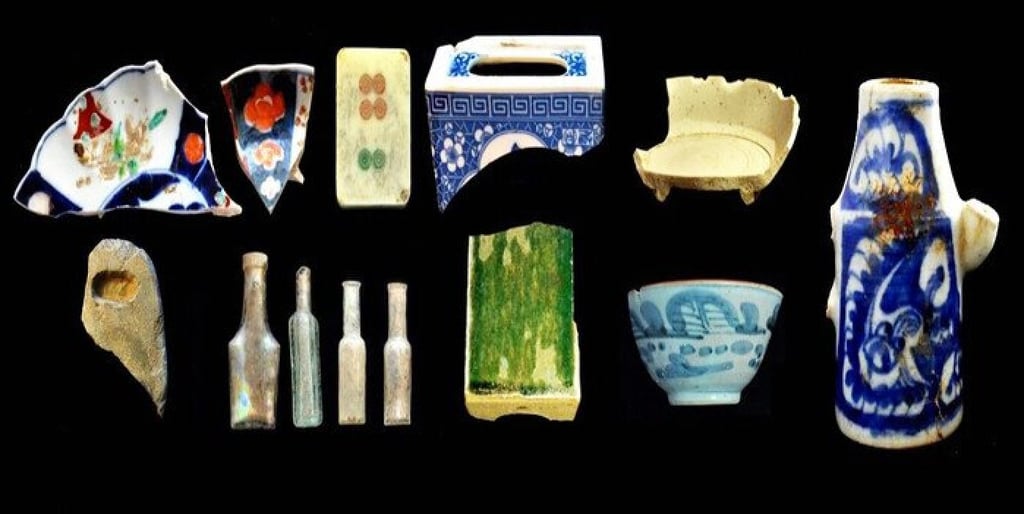
The six-year excavation found remnants of the watchtowers, the north and south walls, and a moat, archaeological expert Julie Van Den Bergh told the Post.
The project’s architectural consultant, Tony Lam Chung-wai, said the expanded park, which would include the watchtowers’ foundations and some of the village wall remains, could present a sense of wai, Cantonese for “to encircle”.
“The four corner watchtowers can vividly show the encirclement,” Lam said. “The public will also be able to know how long these village walls are by walking along them.”
The URA’s latest proposal calls for a park that extends across 21,500 sq ft of the roughly 50,000 sq ft site. Construction of the 750 flats is due to begin in the middle of next year after the government approved a detailed development plan and conservation proposal.