Beijing’s winter Olympians will compete near a summer hunting palace for ancient royalty
- An excavated palace in the village of Taizicheng is believed to have been a summer escape for a Jin dynasty (1115–1234) emperor
- An exhibit opened on December 31 last year is a showcase for ancient Chinese artefacts discovered in the area

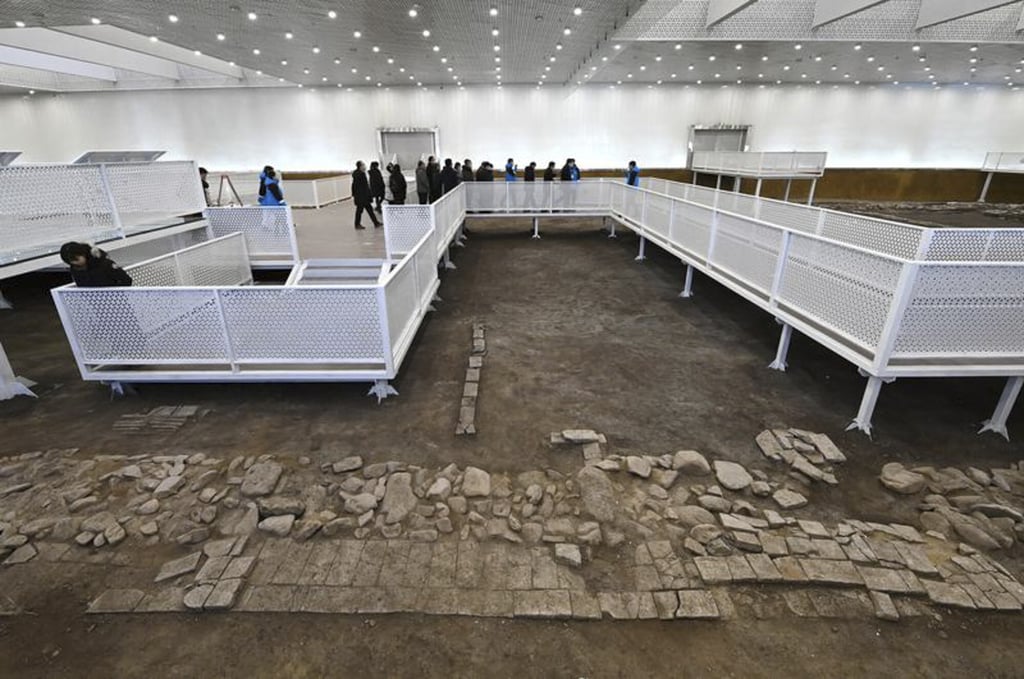
According to the Hebei provincial government, an exhibition opened in nearby Taizicheng village on December 21, 2021. The village is where the palace once stood and the display showcases the artefacts found during an excavation of the area. The site is about 140km away from Beijing.
Some of the artefacts on exhibition include beautiful porcelain, a few of which, somewhat amusingly, appear to have come from a catering company. The collection also showcases a jade dragon that was probably a roof decoration.
“The site is the first Jin dynasty palace excavated and it would have been the second most important location at the time, behind only the Jin dynasty capital city,” said Huang Xin, deputy director of Hebei Provincial Institute of Cultural Relics and Archaeology, in an announcement from the Hebei government.
According to the announcement, the palace mainly served to host nabo culture, an ancient Chinese tradition that dictated that Emperor Zhangzong and his royal family needed to move according to the seasons as his nomadic ancestors did before him. Part of the tradition involved hunting, which is depicted in jade artefacts at the exhibition.