Scientists find oldest description of an aurora, or northern lights, in ancient Chinese texts
- Tucked away in the Bamboo Annals is a description of a “five-coloured light” that researchers think was an aurora event
- It would predate the previous earliest description from the Assyrians by around 300 years

A team of scientists said an ancient Chinese text describes the oldest known record of what we would call an aurora borealis, or “the northern lights”, which they believe happened in the 10th century BC, or about 300 years before the next chronicle of the celestial event from the Assyrians.
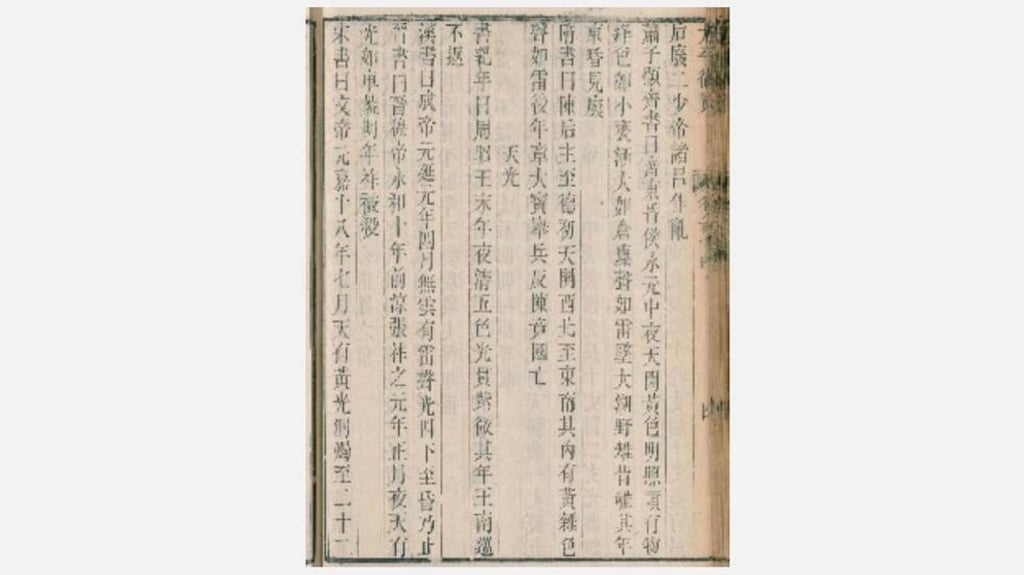
The study said that the earth’s north magnetic pole is known to have been inclined about 15 degrees closer to central China than at present, and the phenomenon could therefore have been visible to observers in central China at “times of significant magnetic disturbance”.
Marinus Anthony van der Sluijs, an independent researcher based in Canada, said that the presence of the aurora in an important historical record means it was probably an event that was “rare enough to be worthy of inclusion in any annals but not unusual from a scientific point of view”.
His co-author, Hisashi Hayakawa from Nagoya University in Japan, said “The auroral visibility in China indicates an occurrence of a quite intense geomagnetic storm at that time”.