Advertisement
Germany
WorldEurope

Germany’s Oktoberfest returns after two-year Covid-19 hiatus but sobering inflation bites, especially for beer makers

  • Prices of a mug of beer have risen about 15 per cent from the last time the festival was held in 2019
  • Inflation woes are piling on Germany’s brewers, with production costs at levels “the German brewing industry has never seen before”

3-MIN READ3-MIN
While brewers are more than glad to see the return of the Bavarian capital’s sudsy tourist centrepiece, both they and visitors are under pressure from inflation in a way that could scarcely be imagined the last time it was held in 2019. Photo: AP
Associated Press
Oktoberfest is back in Germany after a two-year pandemic interruption – the same bicep-challenging beer mugs, fat-dripping pork knuckles, pretzels the size of dinner plates, men in leather shorts and women in cleavage-baring traditional dresses.

But while brewers are more than glad to see the return of the Bavarian capital’s sudsy tourist centrepiece, both they and visitors are under pressure from inflation in a way that could scarcely be imagined the last time it was held in 2019.

For one thing, the 1-litre (2-pint) mug of beer will cost €12.60-13.80 (US$12.84-14.07) this year, which is an increase of about 15 per cent compared with 2019, according to the official Oktoberfest homepage.

Advertisement

The event opens at noon on Saturday when Munich’s mayor taps the first keg and announces “O’zapft is”, or “It’s tapped” in Bavarian dialect.
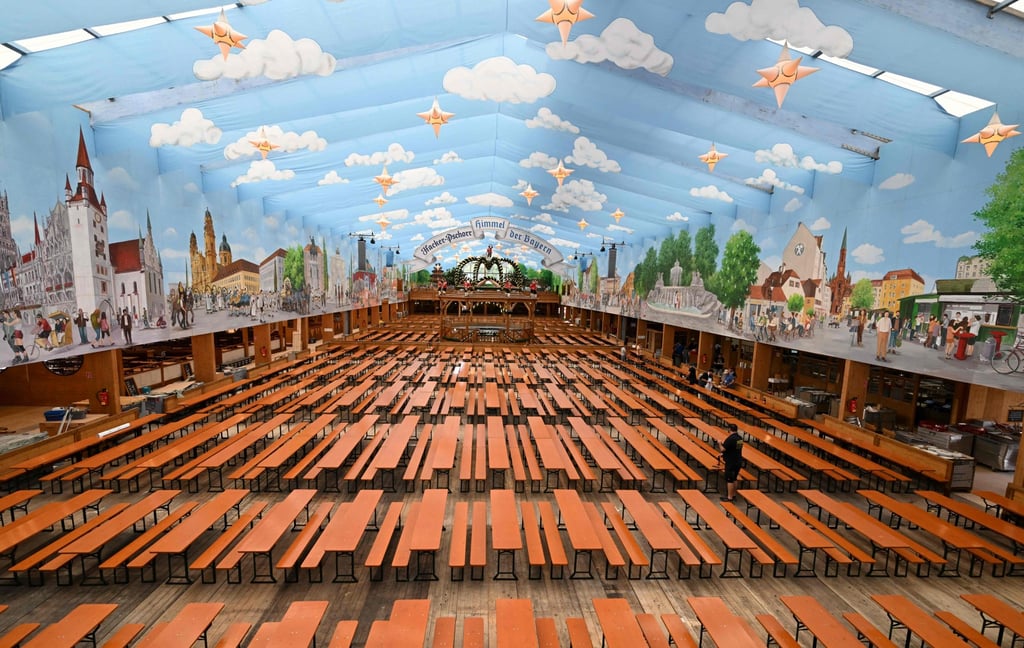
An empty festival tent ahead of the coming Oktoberfest beer festival at the Theresienwiese fair grounds in Munich, southern Germany. The world renowned beer festival is to take place from September 17 to October 3 without access restrictions, after the past two years’ editions had been cancelled due to the coronavirus pandemic. Photo: AFP

For Germany’s brewers, rising costs go much deeper than simply the price of a round at the festival’s long wooden benches. They are facing higher prices all along their chain of production, from raw ingredients like barley and hops to finishing touches such as beer caps and packing material.

Advertisement
Advertisement
Select Voice
Select Speed
1.00x