ExplainerChina ethnic women visit birth families with baskets filled with food to signify abundance
Country’s rapid urbanisation, growth of intermarriage sees ceremony become expression of traditional filial piety

A unique tradition exists among the Zhuang ethnic minority in China, which sees groups of married women return to their birth families dressed in red or traditional ethnic attire, carrying colourful baskets filled with grain and fruit.
The heartwarming celebration of family ties has not only captivated onlookers but also reinforced cherished cultural heritage, with netizens humorously dubbing it the “Queen’s Coronation”.
The Zhuang ethnic group, which is primarily located in southern China’s Guangxi province, is the largest ethnic minority in the country, with an estimated population of 19 million.
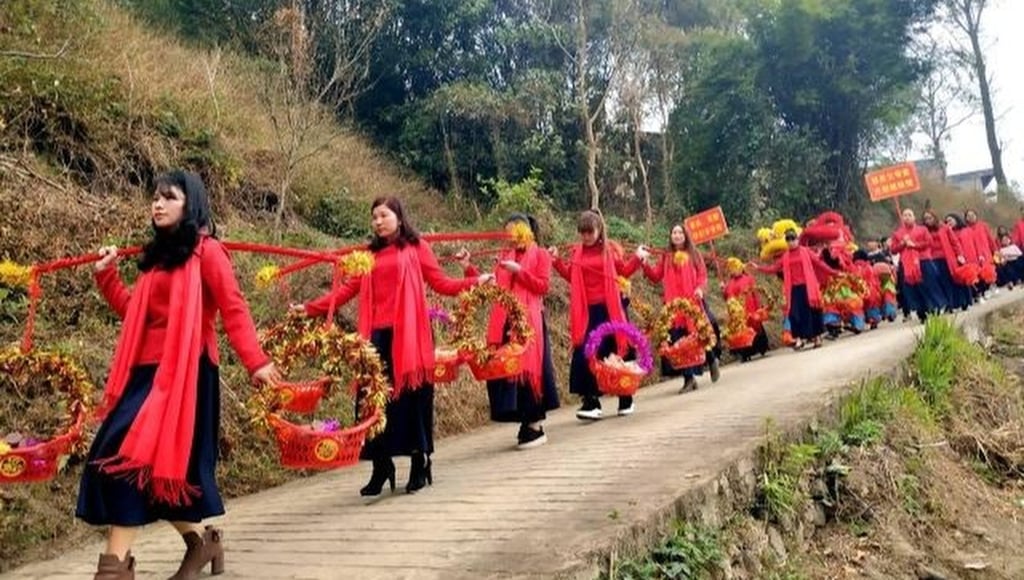
With rapid urbanisation and increasing intermarriage with the Han population, the “returning to the maiden home” ceremony has become a symbolic expression of traditional filial piety.
All this aims to strengthen the emotional bond between married daughters and their families of origin.
It also plays a vital role in preserving ancestral values and promoting traditional ethics.
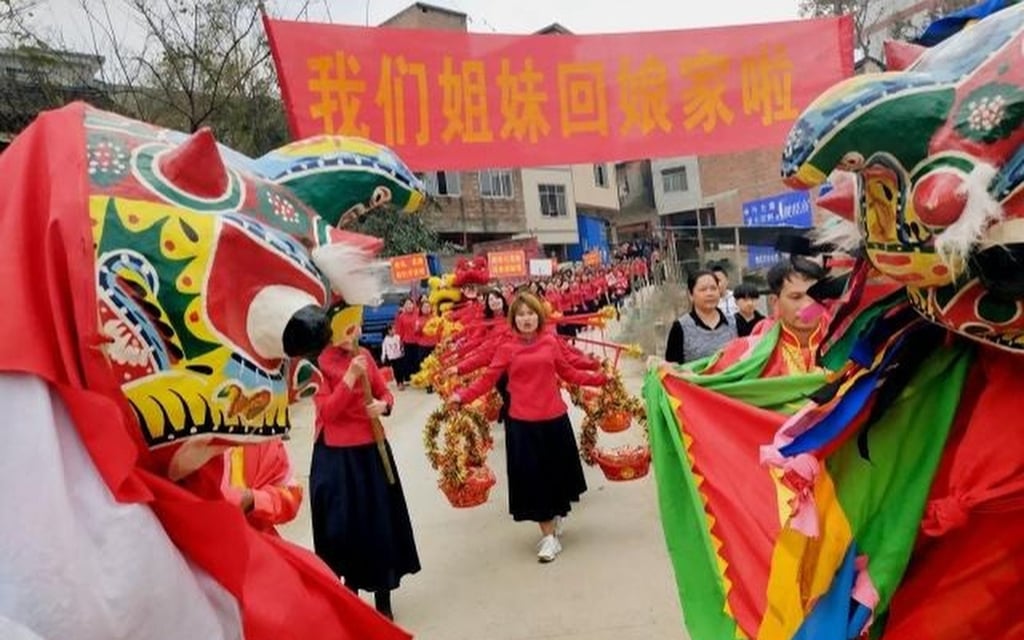
The tradition has historical ties to Han customs, in which a newlywed woman would visit her husband’s family on the first day of the Lunar New Year and return to her maiden home on the second day.