How China and North America drove a mass extinction event 450 million years ago
- A new study suggests that massive volcanic eruptions created the second-largest mass extinction event 450 million years ago
- While an asteroid strike may have been a decisive factor in killing the dinosaurs, a study author suggests the new model should complicate our idea of the extinction

Every person who is moderately interested in dinosaurs knows the theory that they were wiped out some 66 million years ago when an asteroid or comet struck Earth, causing the most famous mass extinction event in history.
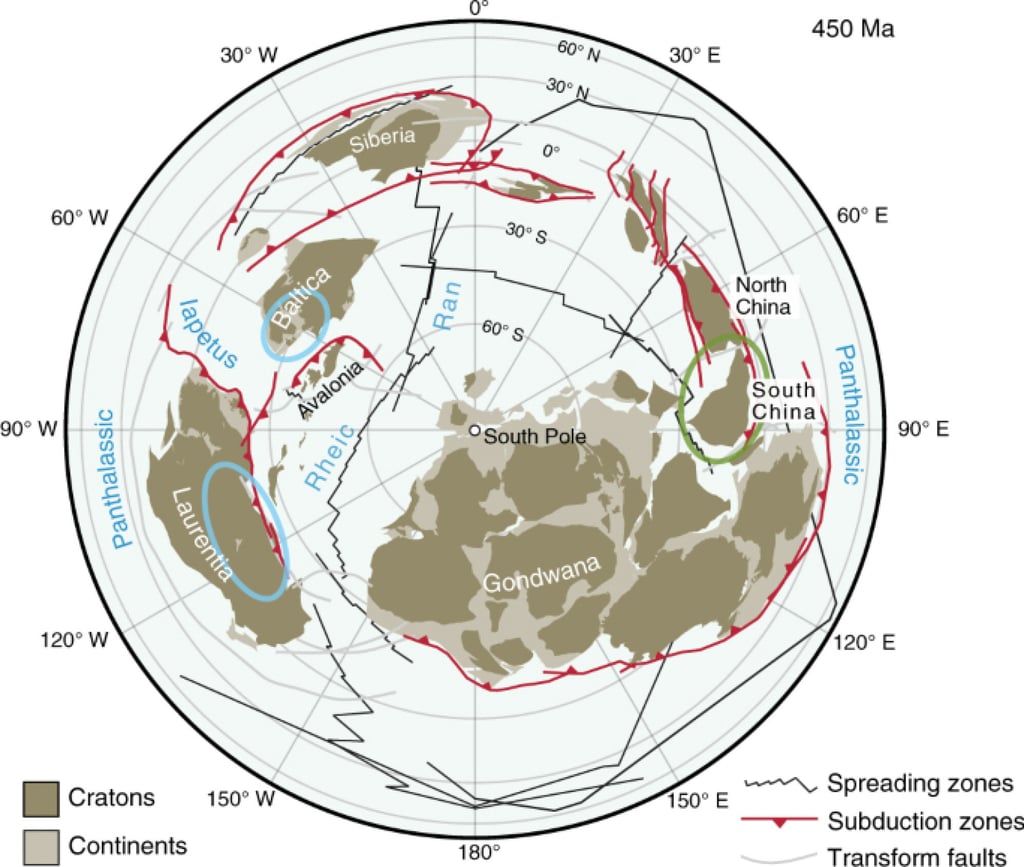
A massive layer of volcanic ash blanketed the world’s seabeds, dwindling oxygen levels, cooling the global temperatures and, in many places, resulting in the environment icing over.
“[The extinction event] affected organisms across the whole range of environments, and so cannot be attached to the wiping out of a specific group of animals, unlike the case of the dinosaurs. It profoundly impacted evolution and development of life on earth,” said Jack Longman, a scientist at Carl von Ossietzky University of Oldenburg in Germany.
Longman was a lead author on a new study published on December 2 in Nature Geoscience, which pinpointed two moments of peak volcanic activity that might have contributed to this extinction environment; one in what is now North America and the other in modern southern China.
The volcanic activity was unrecognisable to what we experience today and far more devastating than anything in our contemporary imagination.