Ancient birds discovered near Great Wall of China, one had pincer-like appendage at the end of its lower jaw for hunting
- The pincer-appendage may have been able to detect subtle changes in water pressure to alert it to nearby prey
- A new species of bird was named after the first woman to lead the Institute of Vertebrate Palaeontology and Paleoanthropology in Beijing

Palaeontologists working about 130km from the Great Wall of China announced last Friday the discovery of two new species of birds that lived alongside the dinosaurs around 120 million years ago.
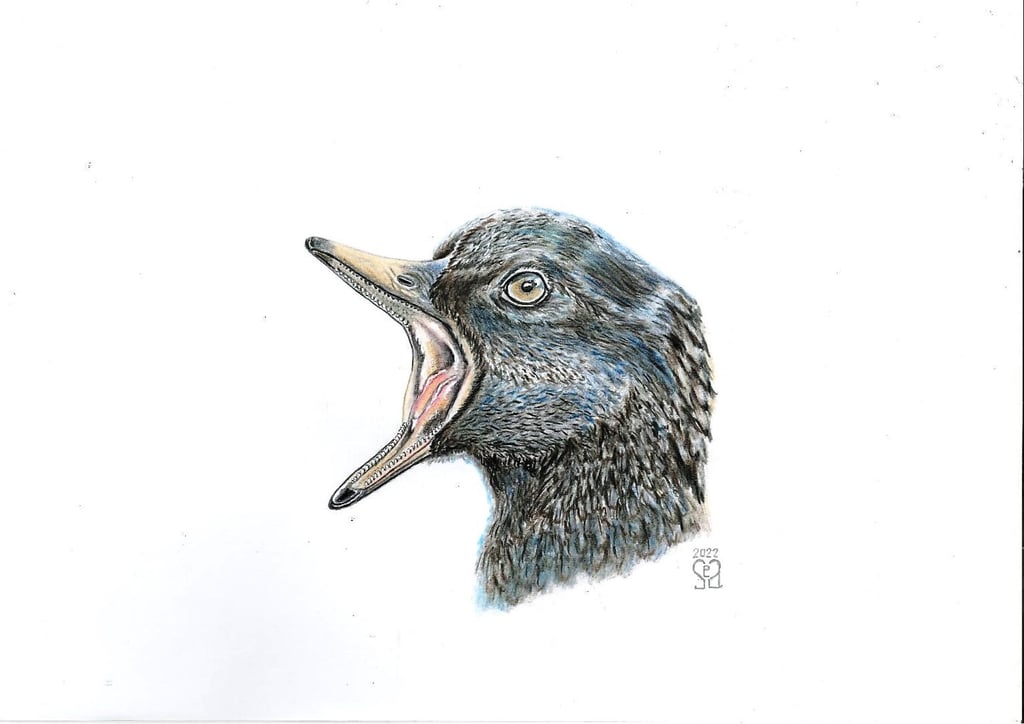
“These birds with predentaries (a bone in the lower jaw) had jaws full of teeth except the tip of the jaws, which had a little beak. The lower half of the beak at the tip, formed by the predentary, could move slightly up and down, helping to grip food with a pincer-like movement,” she said.
O’Connor pointed out that predentaries can be difficult to imagine because the ability to “feel” through the jaw is alien to humans.
“They could probably detect subtle pressure changes in the water that would indicate movement and that prey is nearby. Living birds can do this with something called the bill tip organ, in which sensory cells are clustered at the tip of their beak. Crocs can also do this with special scales on their bodies,” she said.
The other fossil, named Meemannavis ductrix, was toothless, like modern birds. It was named after Meemann Chang, a Chinese palaeontologist who was the first woman to lead the Institute of Vertebrate Palaeontology and Paleoanthropology in Beijing. She was the director between 1983 and 1990.