Advertisement
Was it an innie or an outie? Scientists find first known evidence of a dinosaur ‘belly button’
- The team found it by analysing a fossil that is famous for its well-preserved skin
- But ‘belly button’ may be an imprecise term to describe the scar
2-MIN READ2-MIN

As dinosaurs once again hit the big screen with the recent release of Jurassic World Dominion, one random question that may come to mind is, “did dinosaurs have belly buttons?”
The answer to this question appears to be “yes”, according to a new paper from a global team of scientists who believe they found the first example of a “belly button” ever recorded in dinosaurs.
“I suggested that we could create a new category called a ‘flattie’. But, in terms of what we know as an outie, we would call [the belly button] an outie,” said Michael Pittman, a palaeontologist at the Chinese University of Hong Kong and an author of the study.
Advertisement
The belly button, found on a 130-million-year-old specimen of a Psittacosaurus, is the oldest umbilical scar ever recorded among amniotes, a group of animals that include reptiles and mammals.
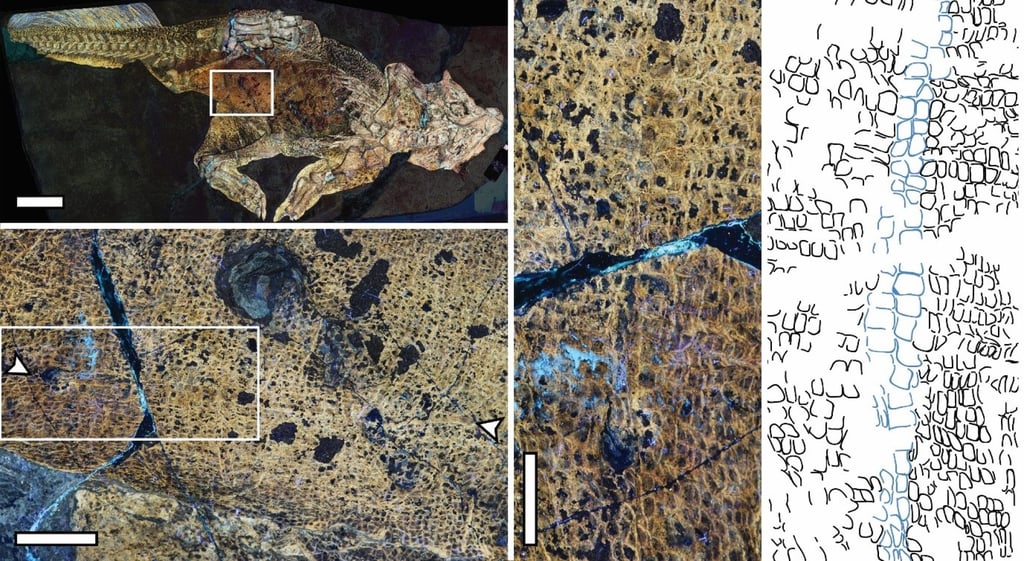
Psittacosaurus are a strange looking dinosaur species famous for grasslike spikes along the end of their tails.
Advertisement
Advertisement
Select Voice
Select Speed
1.00x