‘Exceptionally rare’: 6-sheep chariot unearthed near mausoleum of China’s first emperor
- Previous first historical record of a 6-sheep chariot had come 400 years prior to this most recent discovery
- Chariot appears to be part of an ancient burial ritual

Archaeologists in China unearthed a group of chariots – including a rare “six-sheep” carriage – near the mausoleum of China’s first emperor Qin Shi Huang (r. 221-210BC) in northwest China’s Shaanxi province.
The sheep were likely part of a burial ritual, indicated by the fact that the animals were lined up in an organised fashion. While the chariot’s main body had deteriorated, evidence of tools used to draw a carriage remained on the sheep bones.
Jiang Wenxiao, the leader of the archaeological excavation project, said in the official announcement that the discovery was “exceptionally rare” in Chinese archaeology.
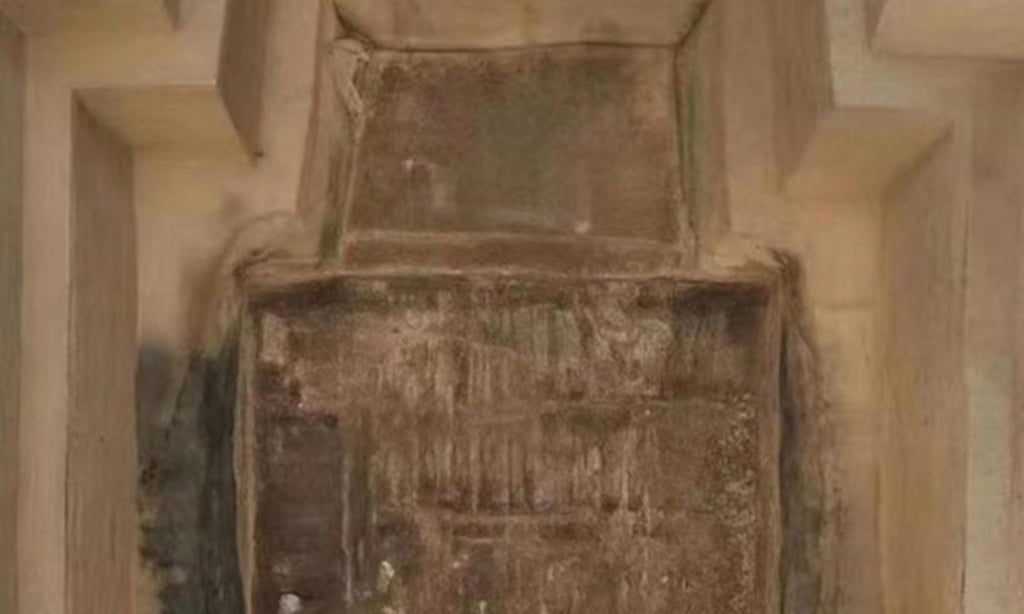
Horse and ox-drawn chariots were common in ancient China, so archaeologists often find those remains – including in this excavation.
However, historical records of sheep-drawn carriages are uncommon, so finding physical evidence of their existence represents a breakthrough.
This chariot was also far older than the first appearance of the six-sheep carriage in historical records.
Before the recent discovery, the oldest example of a six-sheep carriage came from descriptions of Emperor Wu (r. 266-290), the founder of the Jin dynasty (266-420), who would ride a sheep-drawn carriage every evening to take a tour of his palace complex.
The behaviour appears in an ancient sentence that says Emperor Wu was “seeking luck in a sheep carriage,” the first time a mention of a six-sheep carriage appeared in history until now, according to the official announcement.