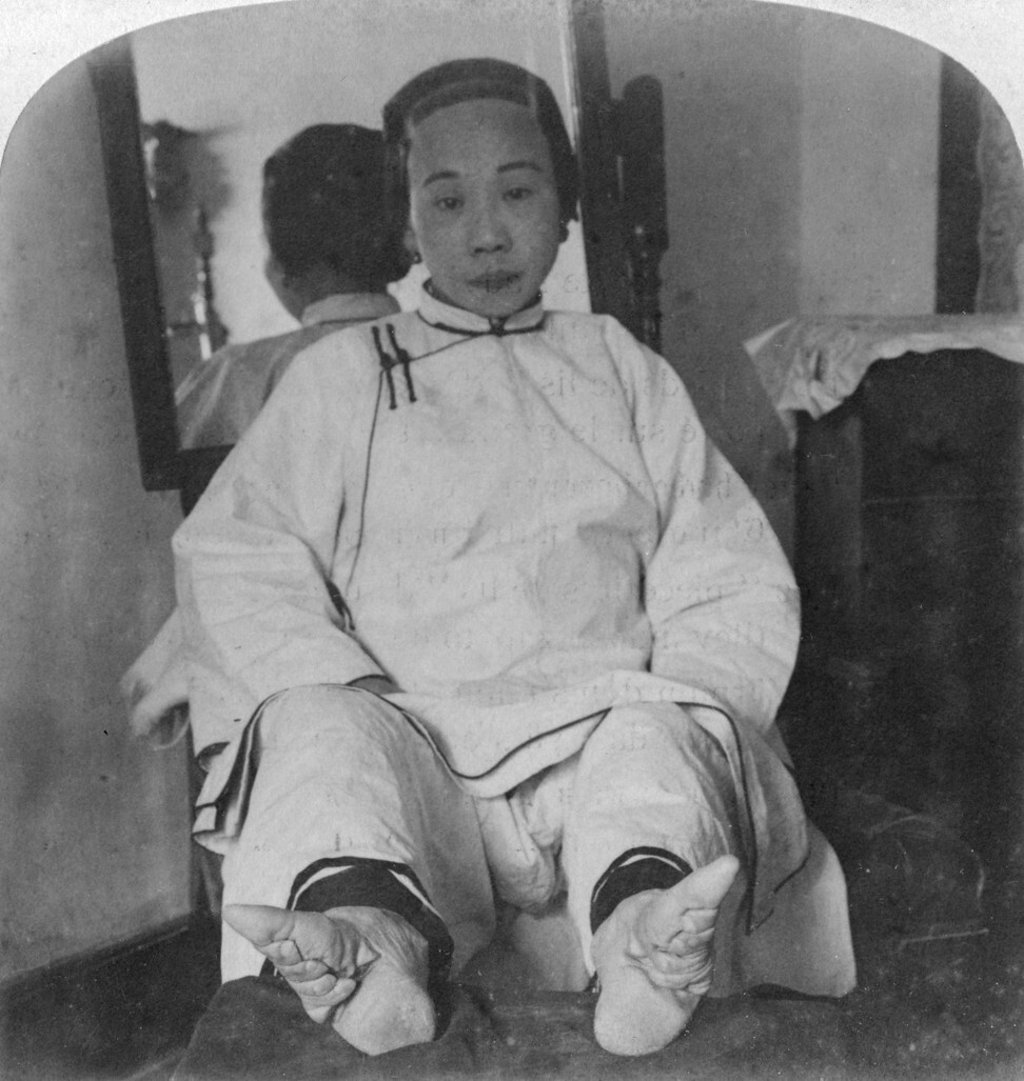
Pain or poverty? Foot binding tradition in Qing dynasty left Chinese women with tough dilemma
- For many women in ancient China, foot binding was the avenue to climbing up the socioeconomic ladder
- But it also eliminated any ability to be financially independent, helping to solidify a patriarchal society
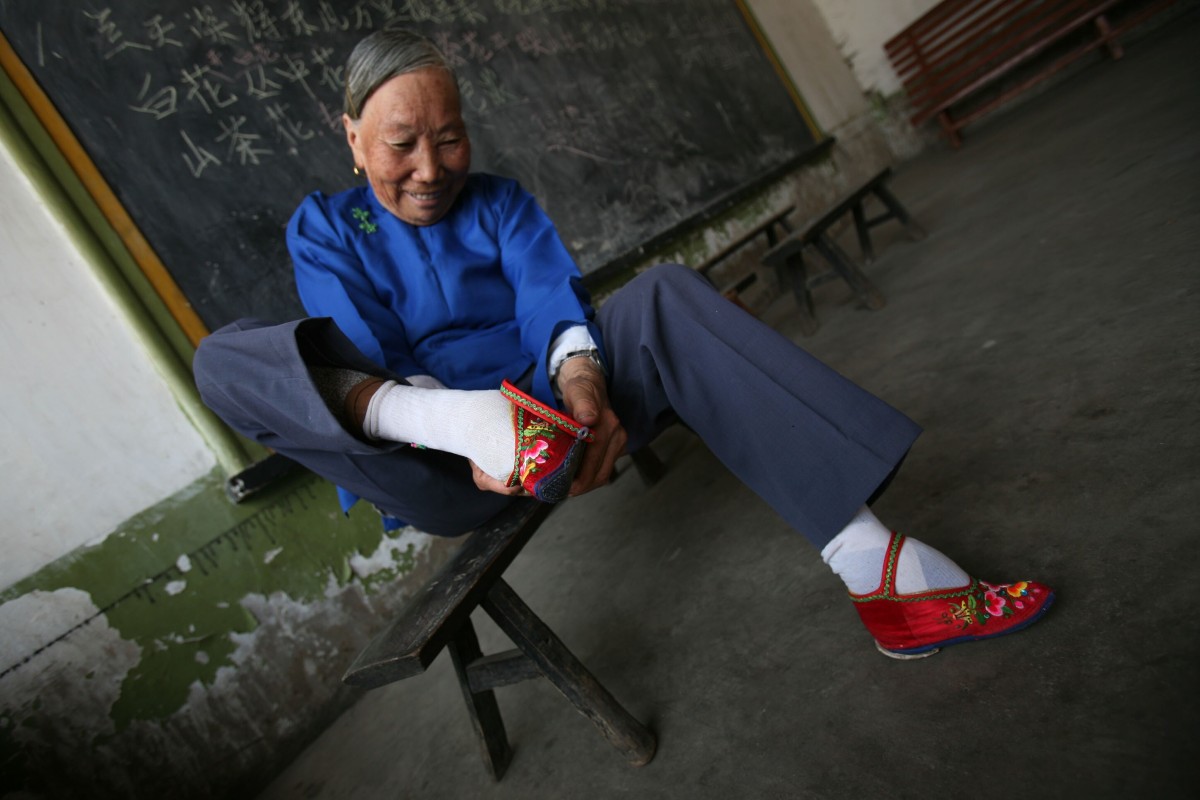
Foot binding was a feature in Han Chinese society for a large swathe of its history and, in certain regions, was nearly ubiquitous for generations.
But because foot binding was not universal in China, it created an impossible decision for women, according to a recent study in Archaeological and Anthropological Sciences.
Social tradition created a system that forced women to choose between: binding their feet and dramatically increasing the likelihood of marrying above their socioeconomic status, or avoiding the practice and achieving relative economic independence but spending their lives relatively poor and performing manual labour.
The team behind the study noted that, besides the physical deformity and pain caused by foot binding, these kinds of decisions were essential for keeping men atop a patriarchal society.
“Without foot binding, women could move around without physical difficulties and were able to engage in a lot of activities; thus, they did not need to depend on men for a living, but rather could be an important part of family labour-forces,” said Qian Wang, a professor at Texas A&M University who was part of the team performing the study.