4,100-year-old mass grave in China reveals secrets of country’s largest Neolithic headhunting massacre
- Ancient people believed beheading helped them steal souls of enemies
- Experts say village was cleared of men before attack on women, children

A 4,100-year-old mass grave discovered in northeast China has shed light on the largest known headhunting massacre of the country’s Neolithic period, according to a study into the remains published in September.
In a dark twist, scientists discovered that all of the victims in the village of Honghe in Heilongjiang province were women and children, which they said indicated the “cruelty of ancient warfare”.
“In historic and prehistoric times, headhunting was a violent act and often an organised and coherent form of interpersonal conflict or violence during warfare and conflict,” Qian Wang, an author of the study and professor at Texas A&M University in the US told the Post.
“Heads of enemy tribes or groups were sought after for a specific ritual meaning, that is, to conquer and/or possess the soul and energy of the enemies,” he said.
Archaeologists first discovered the site in the 1990s and it has been excavated six times since then.
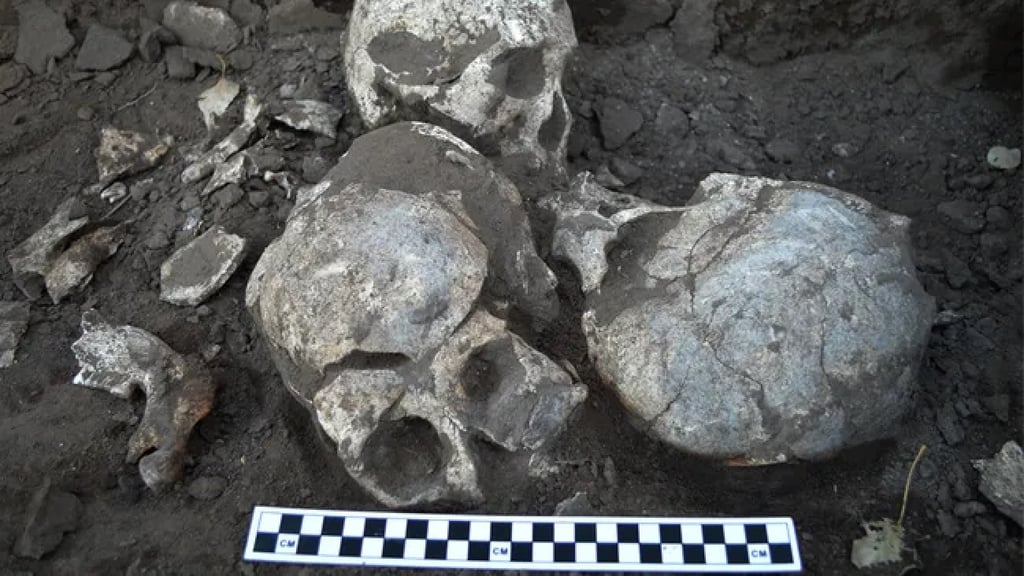
The digs unearthed 43 individuals who fell victim to multiple headhunting events, including 32 individuals who were probably killed in a single massacre, which would be the largest known headhunting event in Neolithic China.