‘Stamp boy’: sealing passion of China emperor criticised for harming artistic integrity
When Qianlong came across paintings and calligraphy he admired, he would place his seals on those artworks multiple times

As one of the most frequently portrayed Chinese emperors in modern costume dramas, Qing dynasty Emperor Qianlong is also renowned for his obsessive habit of impressing seals onto his art collections.
The Qianlong Emperor (reigned 1735–1796, died 1799) was exceptionally long-lived even among rulers, and he is celebrated for ushering in a prosperous era alongside his father, Yongzheng, and grandfather, Kangxi.
Additionally, he is famous for his enthusiasm for art and literature. Not only did he compose over 40,000 poems, but he also sponsored the monumental encyclopaedia Siku Quanshu, or Complete Library of the Four Treasures.
A well-known narcissist, Qianlong referred to himself as the “Old Man of Ten Great Campaigns” in 1792, lauding the 10 significant victories from the battles he initiated to resolve border conflicts.
This narcissism extended to his passion for art. When Qianlong encountered paintings and calligraphy that he favoured, he would stamp his seals repeatedly on those artworks.
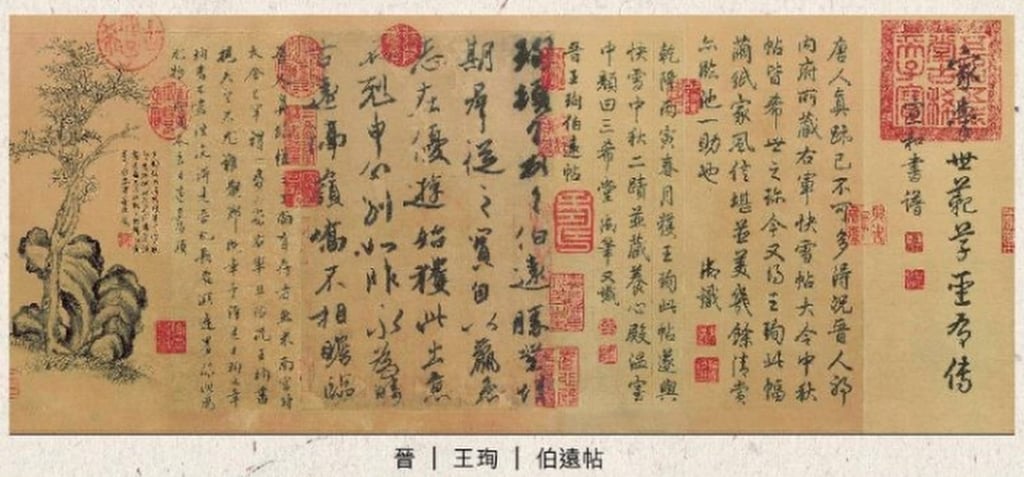
In China, there is a long-standing tradition of imprinting seals on paintings and calligraphy dating back to the Tang dynasty (618–907).