Ancient Chinese lord buried with bells meant to silence ancestral war rituals
Nobleman used ceremony to invoke help from ancestors, and then politics made it awkward

Imagine, for a moment, that you lived in ancient China, with a rival state threatening your people’s very existence. In the quest for any advantage, one strategy might involve performing a ceremony to invoke assistance from the ancestors.
However, life and politics are not static; old rivals can transform into close allies. This transformation raises an intriguing question: do ancient war ceremonies simply fade away when they lose relevance? A recent discovery in China indicates that, at least during the Zhou dynasty (1046–256 BC), people believed the answer was “no,” suggesting that old ceremonies needed to be “turned off.”
The research, published by Cambridge University Press, indicates that individuals – excluding thieves – had intentionally tampered with the resting place of Lord Qiu, a member of the political elite from the state of Zeng.
Chinglong Tse, the study’s author and a PhD candidate at the Institute of Archaeology, University College London, posited that these intruders likely sought to “turn off” a connection to ancient ancestors established by Qiu, which had become politically inconvenient amid shifting social dynamics.
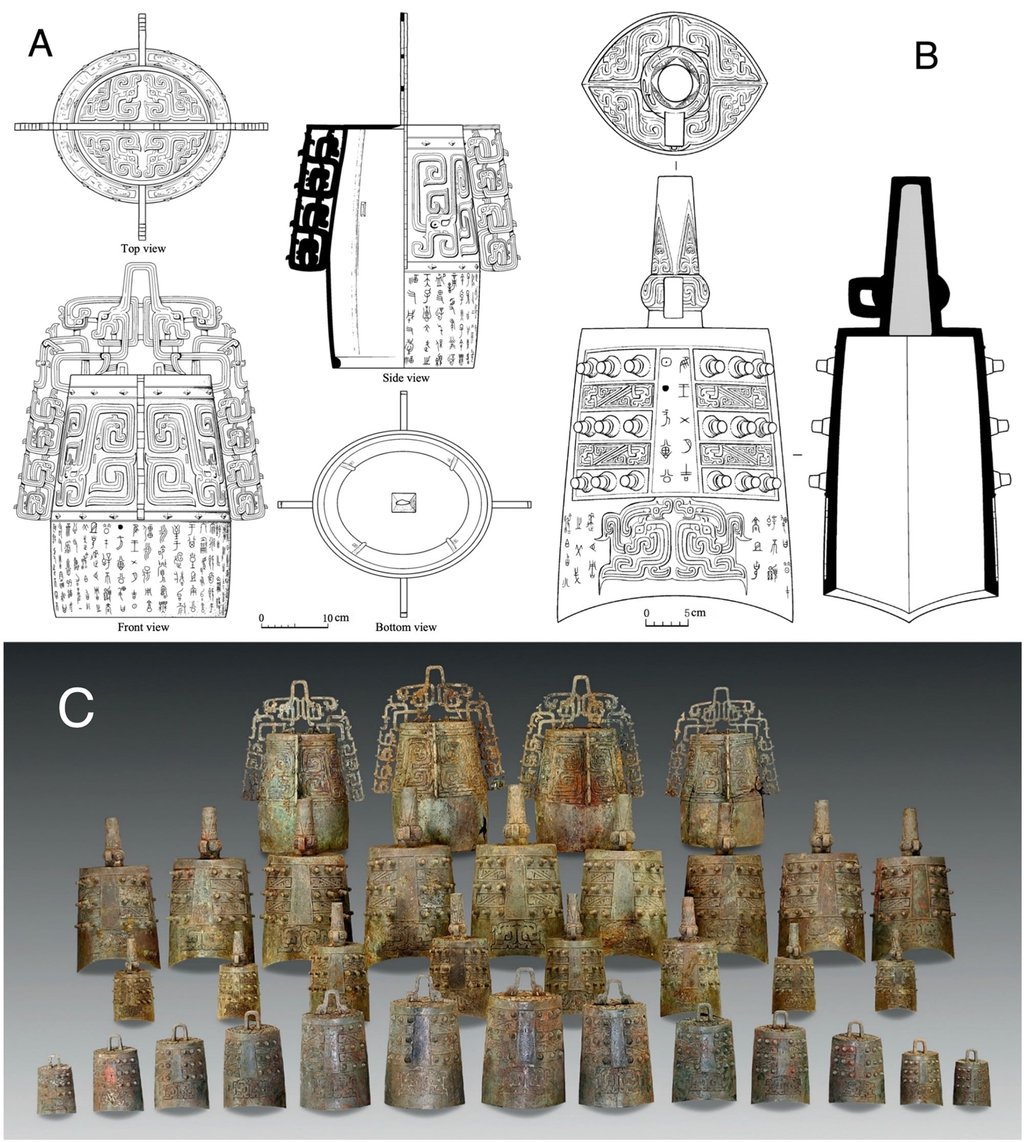
“It mattered a lot whether particular ceremonial instruments coupled with the dead because it determined which kind of ritual capacities the mourners wanted the deceased to sustain in his/her afterlife,” Tse stated.