Chinese scientists unearth 2,000-year-old cousin of chess played by royals and commoners
Universally loved across Western Han society (202 BC–9), Liubo grew from a children’s game into an elite intellectual sport

There is no game quite like chess, which is so beloved and intricate that millions of people around the world dedicate their lives to mastering its strategies.
The history of chess stretches back thousands of years to ancient India and has seen various relatives emerge over the centuries across the globe.
One such counterpart is Liubo, or “six sticks,” a Chinese board game that enjoyed widespread popularity during the Western Han dynasty (202 BC–9).
Recently, the Shaanxi Provincial Institute of Archaeology announced the discovery of a 2,000-year-old “chessboard” unearthed during a 2023 excavation that also revealed exquisite figurines, according to the Global Times.
Though the exact rules of Liubo were lost during the Tang dynasty (618–907), it is believed to have been a two-player game in which each participant controlled six pieces that they manoeuvred around the board.
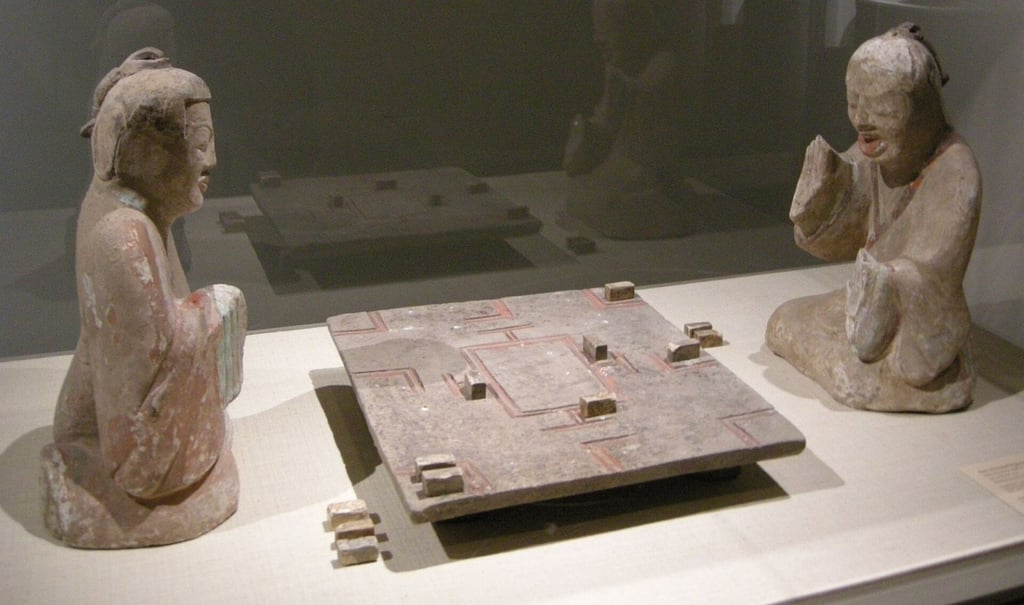
Historians consider it to be a predecessor of Chinese chess, and some wonder if the game was eventually overshadowed by the rise in popularity of Go, which remains one of the most iconic board games in contemporary China.