Humanity’s strange new cousin is shockingly young - and shaking up our family tree

Homo naledi, a strange new species of human cousin found in South Africa two years ago, was unlike anything scientists had ever seen.
Discovered deep in the heart of a treacherous cave system - as if they’d been placed there deliberately - were 15 ancient skeletons that showed a confusing patchwork of features. Some aspects seemed modern, almost human. But their brains were as small as a gorilla’s, suggesting Homo naledi was incredibly primitive. The species was an enigma.
Now, the scientists who uncovered Homo naledi have announced two new findings: they have determined a shockingly young age for the original remains, and they found a second cavern full of skeletons. The bones are as recent as 236,000 years, meaning Homo naledi roamed Africa at about the time our own species was evolving.
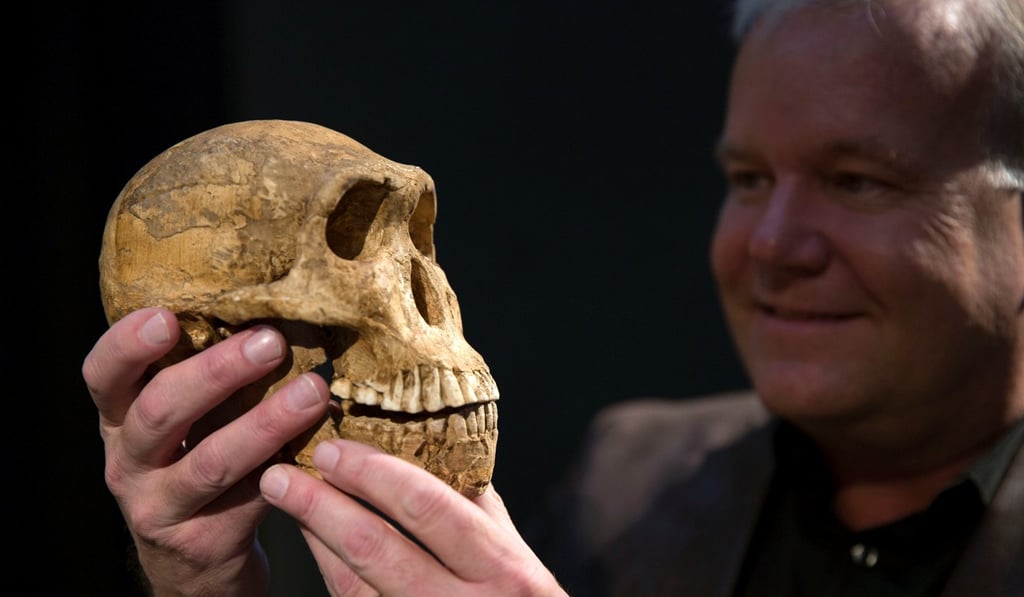
“This is a humbling discovery for science,” said Lee Berger, a paleoanthropologist at the University of the Witwatersrand in Johannesburg. “It’s reminding us that the fossil record can hide things . . . we can never assume that what we have tells the whole story.”
Berger and his colleagues report Naledi’s age and the new chamber in two papers published Tuesday in the open-access journal eLife. In a third paper, they argue that Naledi must be a long-lasting lineage that arose 2 million years ago during the early days of the genus Homo and somehow survived long enough to coexist with modern humans, who emerged about 200,000 years ago.