Desmond Tutu to be cremated by environmentally friendly method ‘aquamation’
- Aquamation, or ‘alkaline hydrolysis’, consists of cremation by water rather than fire
- Tutu, who died on December 26 aged 90, was known for his modest lifestyle. He left instructions that his funeral ceremony should be simple and without frills

The body of Archbishop Desmond Tutu is to be reduced to dust by aquamation, a new cremation method using water that funerary parlours are touting as environmentally friendly.
Like human composting, a technique of composting bodies with layers of organic material such as leaves or wood chips, aquamation is still authorised only in certain countries.
In South Africa, where Tutu died last Sunday, no legislation governs the practice.
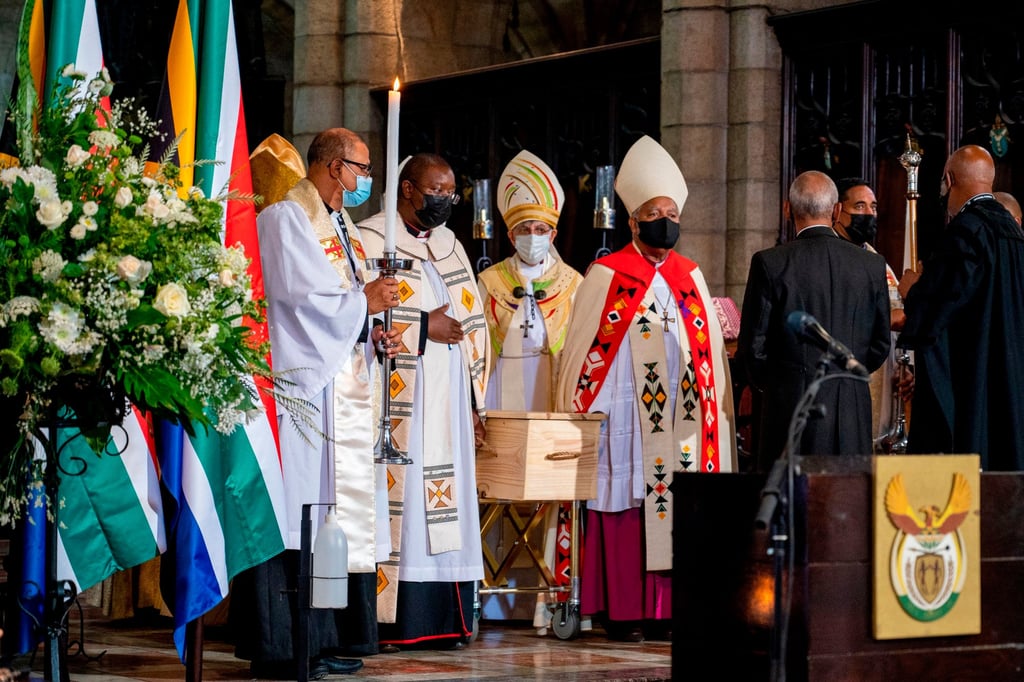
Aquamation, or “alkaline hydrolysis”, consists of cremation by water rather than fire.
The body of the deceased is immersed for three to four hours in a mixture of water and a strong alkali such as potassium hydroxide in a pressurised metal cylinder and heated to around 150 degrees Celsius.
The process liquefies everything except for the bones, which are then dried in an oven and reduced to white dust, placed in an urn and handed to relatives.
First developed in the early 1990s as a way to discard the bodies of animals used in experiments, the method was then used to dispose of cows during the mad cow disease epidemic, US-based researcher Philip R Olson said.
In the 2000s US medical schools used aquamation to dispose of donated human cadavers, before the practice made its way into the funeral industry, Olson wrote in a 2014 paper.