Chocolate market faces turbulence as Ivory Coast and Ghana throw down gauntlet on cocoa price
- Cocoa growers are escalating their fight to improve farmer pay; want buyers to pay premiums and resume deals
- Farmers are threatening to punish corporations by barring them from visiting plantations to estimate harvests – a key factor in cocoa price forecasting

The world’s chocolate industry could be in for a turbulent ride as the two biggest cocoa producers set down demands for manufacturers to pay higher prices for their growers.
The quarrel focuses on the Living Income Differential (LID) – a policy that Ivory Coast and Ghana introduced in 2019 to fight poverty among cocoa farmers in the global US$130-billion chocolate market.
Under it, Ivory Coast and Ghana vowed to charge a premium of US$400 per tonne on all cocoa sales, starting with the 2020/21 harvest.
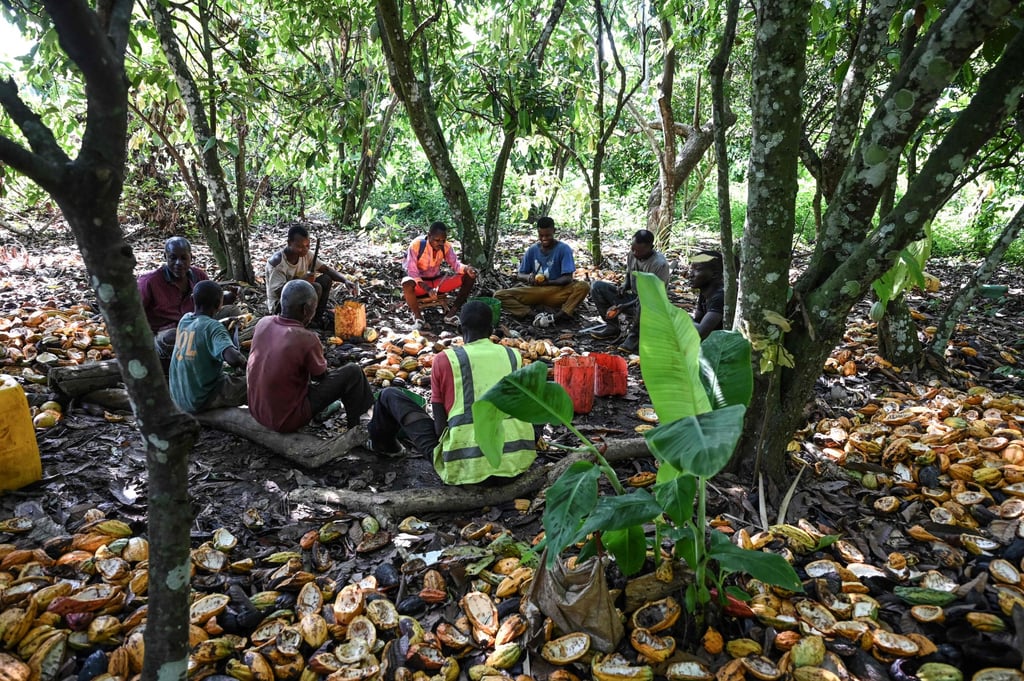
But trade boards in the countries – the Ivorian Coffee-Cocoa Council (CCC) and the Ghana Cocoa Board (Cocobod) – say the scheme is being undermined as cocoa traders depress the price of another premium that operates in parallel.
“We’ve introduced the Living Income Differential as a means of improving the farmer income,” said Fiifi Boafo, Cocobod’s spokesperson.
“You have these companies circumventing these processes to ensure that the Living Income Differential effect is not felt in (their) lives.”
The two countries together account for 60 per cent of the world’s cocoa but their farmers earn less than six per cent of the industry’s global revenue.
They boycotted a bridge-building meeting in Brussels late last month and set November 20 as a deadline for bringing buyers into line.