Remote Amazon tribe tries to straddle two worlds to protect their way of life
The Waiapi only came into contact with the Brazilian government in the 1970s and to this day exist much as their ancestors did before Europeans arrived five centuries ago
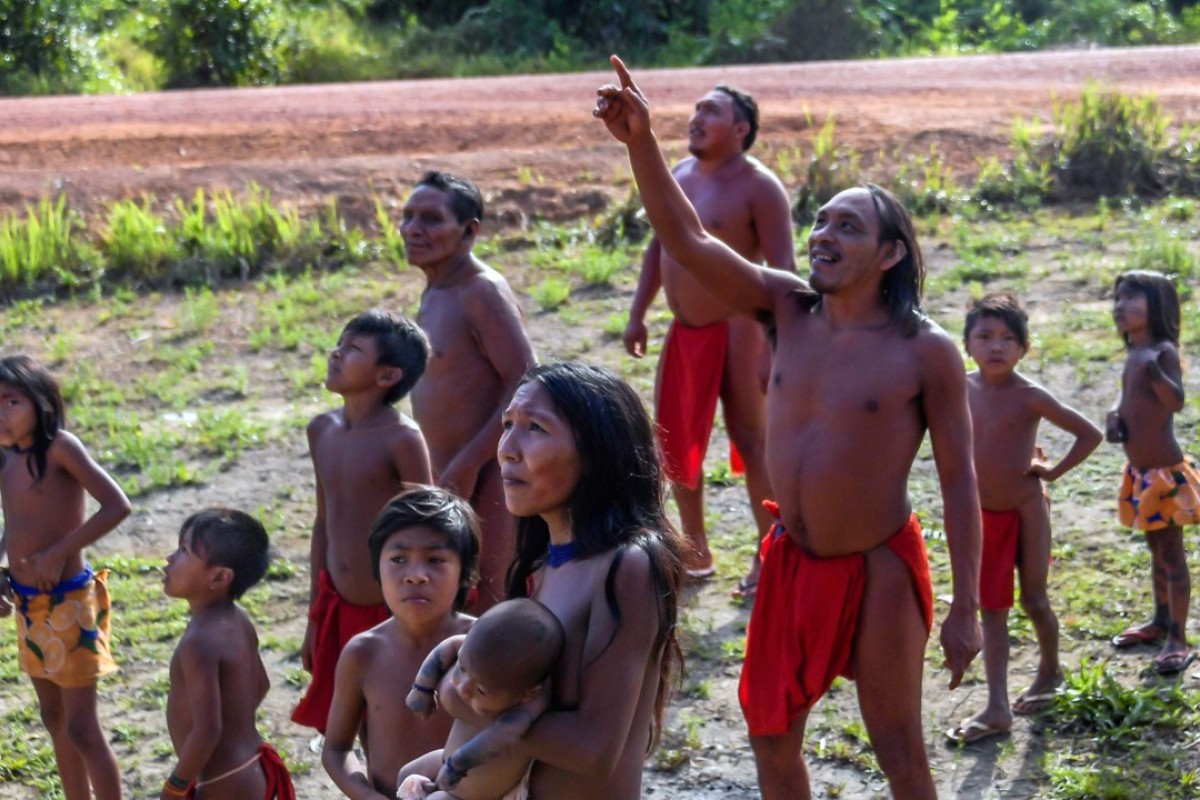
Transfixed, tribal villagers in Brazil’s Amazon rainforest look up, pointing at the sky. “Aeroplane!” says one.
The sight of the aircraft, just a silvery dot high above the Waiapi settlement of Manilha, mesmerises the villagers, who are naked except for bright red loincloths and red-and-black bodypaint made from the seeds of urucum and jenipapo fruits.
“Do you think it came to look at us?” asks Aka’upotye Waiapi, 43, elder son of the chief.
Even after the disappearance of the plane – from which the Amazon must appear as little more than a dark green carpet – a feeling of unease remains.
The Waiapi only came into contact with the Brazilian government in the 1970s. To this day, they exist much as their ancestors did before Europeans arrived in South America five centuries ago, living in harmony with the planet’s biggest rainforest. But the outside world is getting ever closer.
At first glance, life in Manilha and dozens of other tiny settlements of thatched, open-sided houses appears to be from another age.