Thousands of newly discovered structures prove Mayan civilisation in Guatemala was much larger than we thought
Aeroplane-based mapping tools identified tens of thousands of structures constructed by the ancient civilisation: defence works, houses, buildings, industrial-size agricultural fields, even new pyramids

Archaeologists have spent more than a century traipsing through the Guatemalan jungle, Indiana Jones-style, searching through dense vegetation to learn what they could about the Maya civilisation that was one of the dominant societies in Mesoamerica for centuries.
But the latest discovery – one archaeologists are calling a “game changer” – did not even require a can of bug spray.
Scientists using hi-tech, aeroplane-based lidar mapping tools have discovered tens of thousands of structures constructed by the Maya: defence works, houses, buildings, industrial-size agricultural fields, even new pyramids. The findings, announced on Thursday, are already reshaping long-held views about the size and scope of the Maya civilisation.
“This world, which was lost to this jungle, is all of a sudden revealed in the data,” said Albert Yu-Min Lin, an engineer and National Geographic explorer who worked on a television special about the new find. “And what you thought was this massively understood, studied civilisation is all of a sudden brand new again,” he told The New York Times.
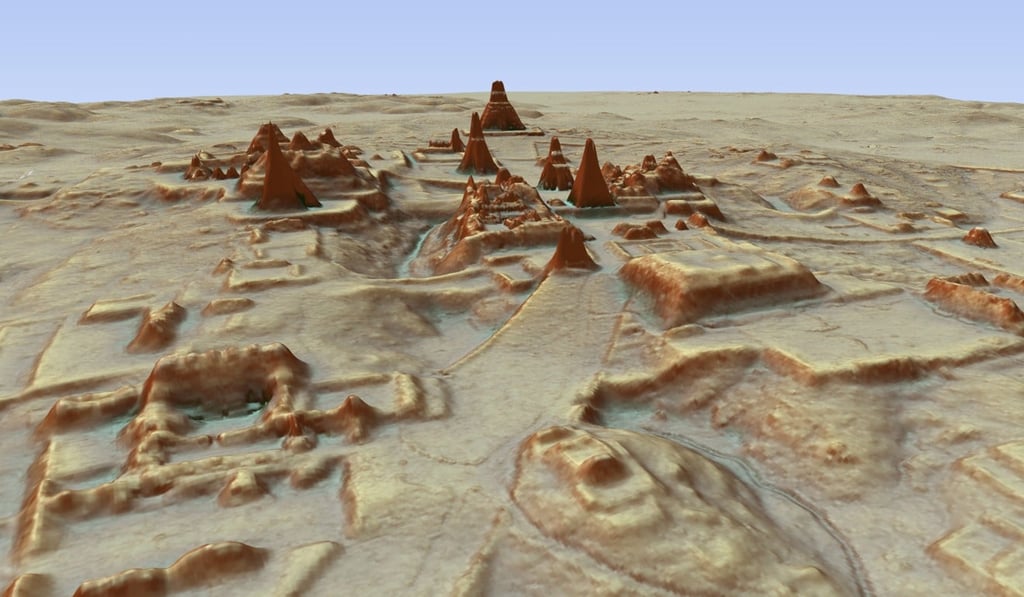
Thomas Garrison, an archaeologist at Ithaca College who led the project, called it monumental: “This is a game changer,” he told NPR. It changes “the base level at which we do Maya archaeology”.