Ancient priest’s remains are a first-of-a-kind find for Peru team
- A group of Japanese and Peruvian archaeologists have discovered the 3,000-year-old tomb of a priest alongside ceramic offerings in northern Peru
- Excavator Yuji Seki said the find was important as ‘he is one of the first priests to begin to control the temples in the country’s northern Andes’

“We have recently discovered the tomb of a 3,000-year-old figure at the Pacopampa archaeological site,” in the Cajamarca region, 900km (560 miles) north of Lima, archaeologist Juan Pablo Villanueva said on Saturday.
“He is one of the first priests in the Andes to have a series of offerings,” the researcher said, adding that “the funerary context is intact.”
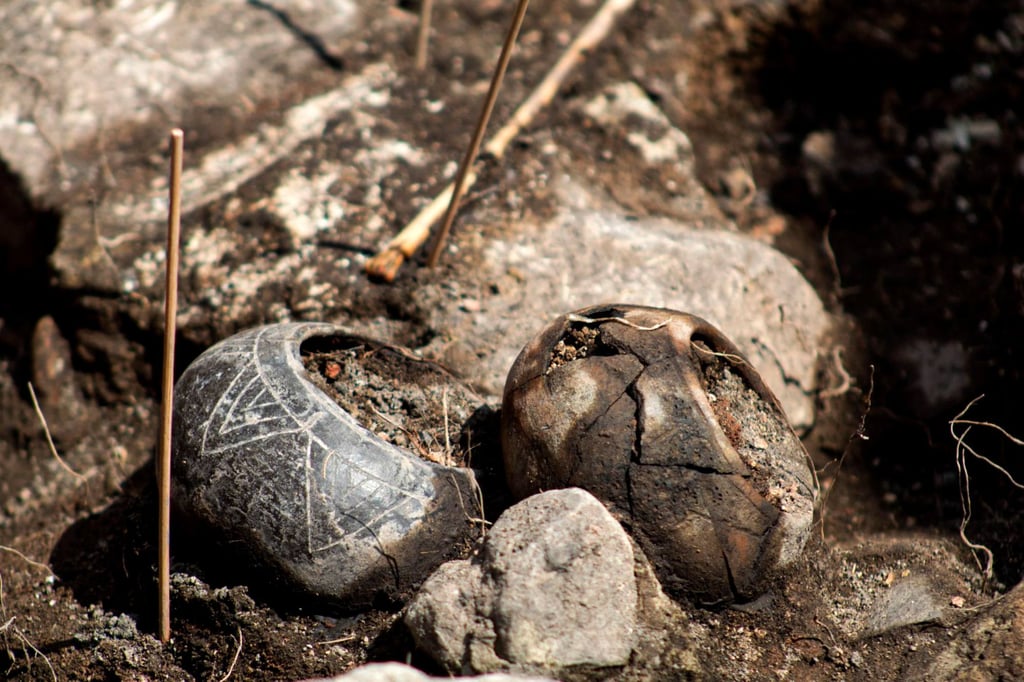
The body, its lower extremities partially flexed, was oriented from south to north. On the western side of the tomb were small spherical ceramic bowls, a carved bone spatula and other offerings.
Two seals were also found, one with designs of an anthropomorphic face and the other with that of a jaguar.
The body and the offerings were covered by at least six layers of ash and earth. The tomb is circular, three metres in diameter and one metre deep (10 ft by 3.3 ft).
“The find is extremely important because he is one of the first priests to begin to control the temples in the country’s northern Andes,” Japanese archaeologist Yuji Seki, who has been working at the site for 18 years, said.
Researchers estimate that the priest lived around 1,000 BC.