In the Peruvian Andes, the new year is welcomed with a punch-up, then a hug
- Takanakuy, a Quechua-language word that means ‘to hit each other’, is a holiday tradition that allows neighbours to resolve problems and end the year in peace
- Duels are brief in the competition that takes place every December 25, with foreigners also welcome to join

The fighting begins and ends with a hug, part of a singular ritual that has residents of the Peruvian Andes punching and kicking in a year-end fight competition known as Takanakuy.
Before the duelling starts in an open-air arena, male fighters remove their elaborate headgear – stuffed birds, foxes or even goat heads worn as symbols of strength or to bring good luck.
Many participants in the holiday tradition come from the town of San Juan de Lurigancho in Chumbivilcas province, part of the Cusco department southeast of Peruvian capital Lima.
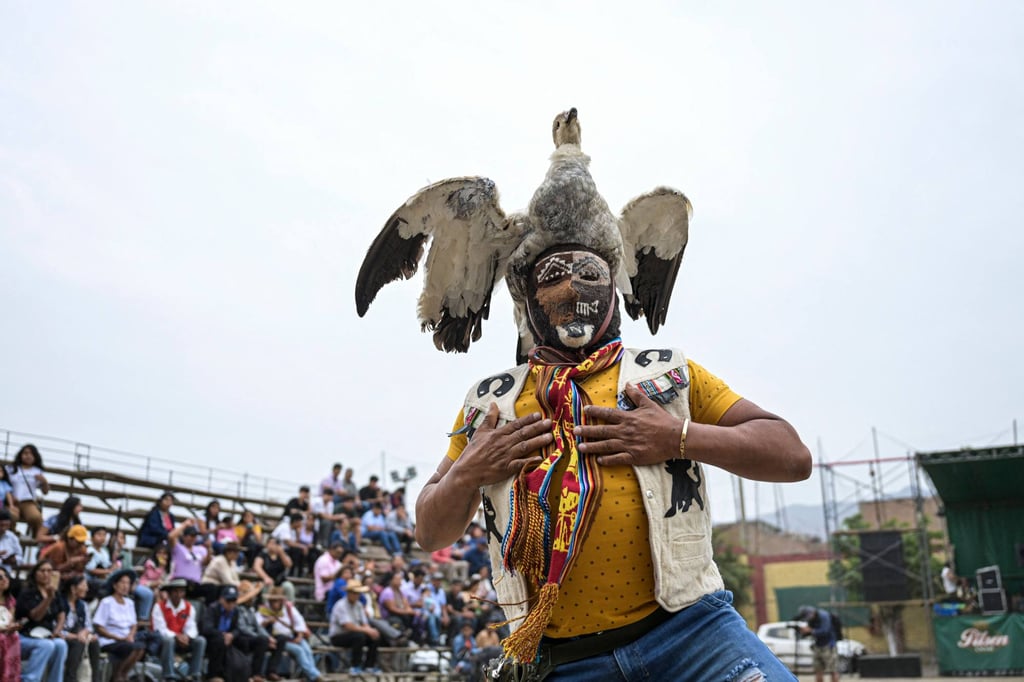
The atmosphere is more celebratory than grim. Wearing traditional costumes or leather jackets and boots, men and women join to do the Huaylia, a traditional Andean dance.
The party, however, will end in a fight.
It’s all part of the Takanakuy, a Quechua-language word that means “to hit each other”.
The tradition, which dates to Spanish colonial times, evolved over the centuries to become a means of settling accounts between neighbours in areas where there was no authority.