Mile-high buildings feasible, architect says
Towers three times the height of world's tallest are feasible, architect says, and Middle Eastern nations are vying to be first to reach to 1.6km
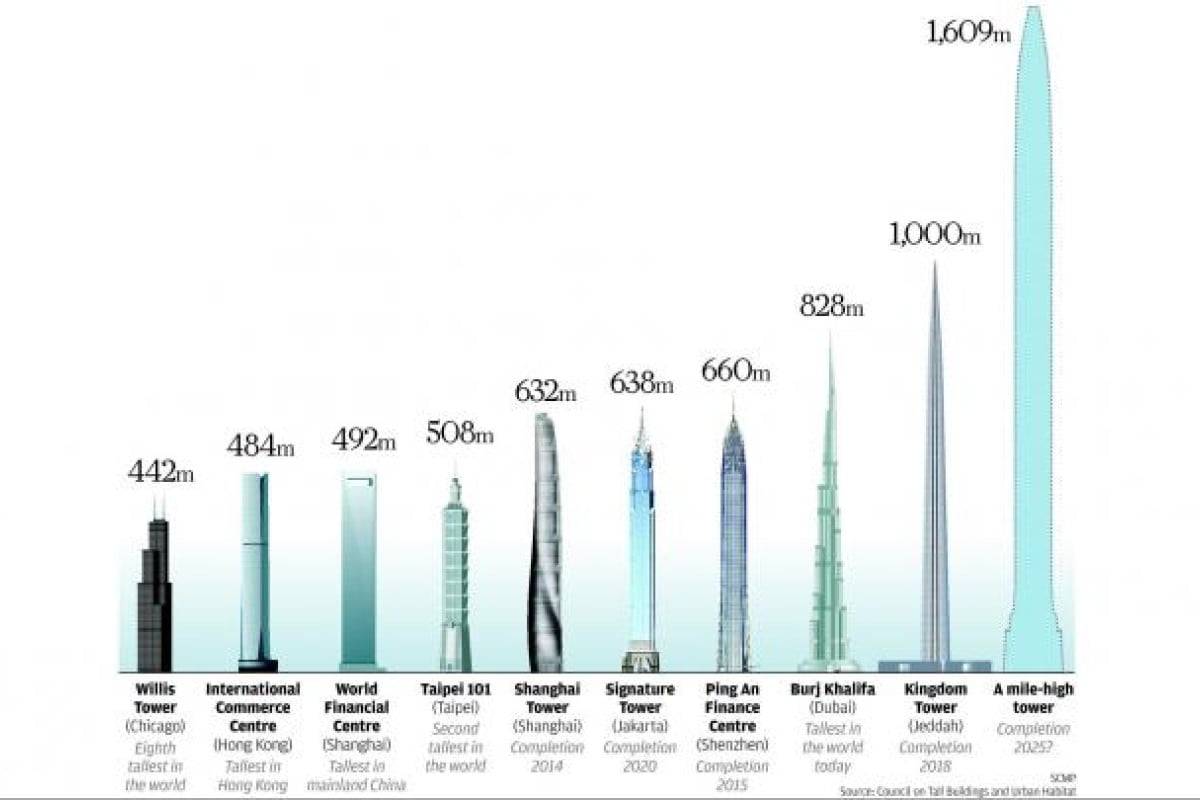
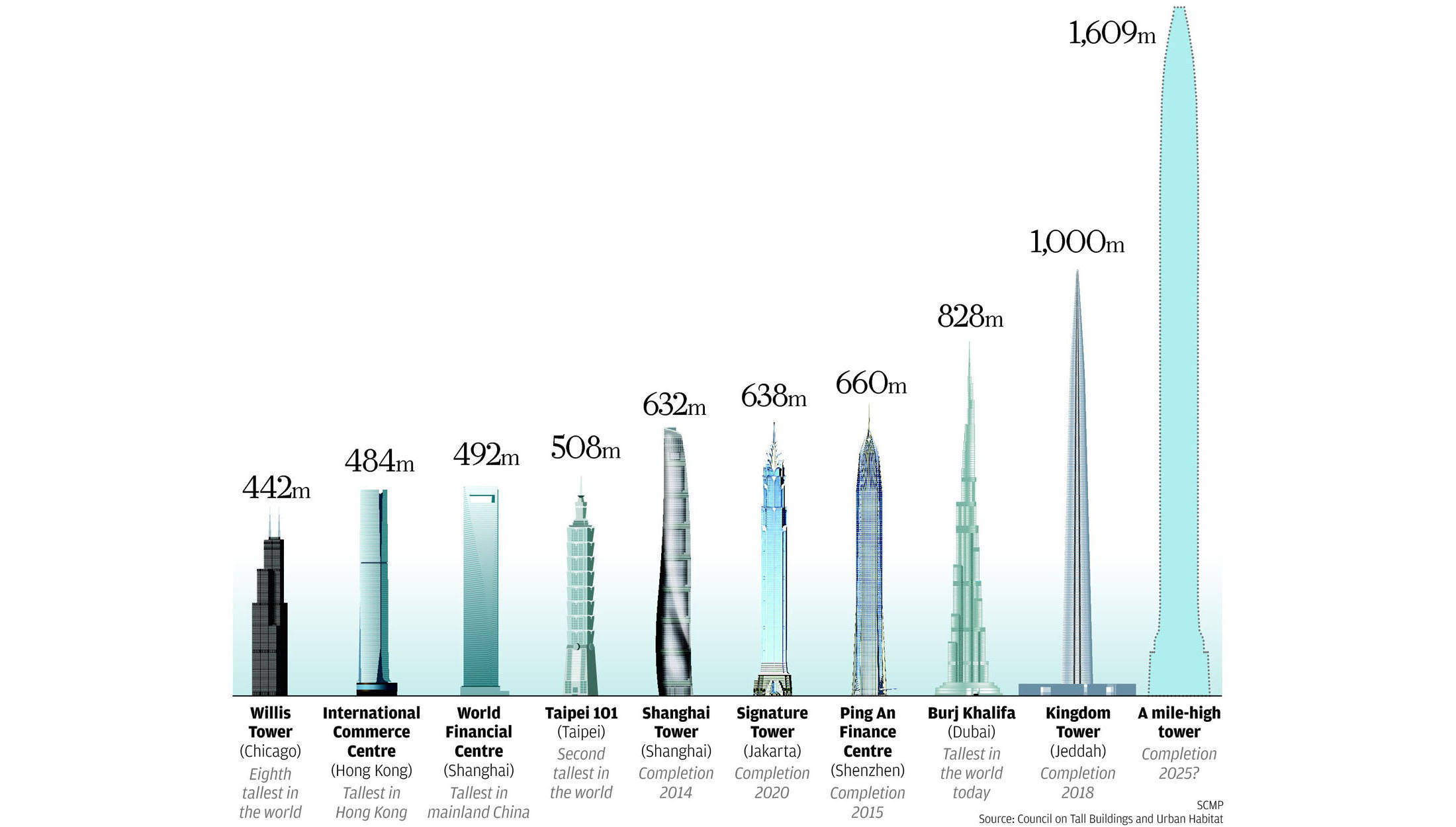
A mile-high skyscraper, almost double the height of today's tallest building, may become a reality by 2025 as countries splurge cash in an ego-fuelled race to construct the world's highest tower.
"If you have enough money, I'm sure the human mind can create a lot higher," said Timothy Johnson, an architect and head of the Council on Tall Buildings and Urban Habitat, in an interview. "Who are we to say it's good or bad. People want to push higher and higher. That's just human nature, isn't it?"
Planning for the next milestone, a 1.6-kilometre tall building, might be under way before 2020 and completed five years after that, Johnson said, without giving further details. Johnson designed The Sail at Marina Bay in Singapore, the world's 10th tallest residential building.
Today's highest skyscraper - the 828-metre Burj Khalifa in Dubai - is set to be overtaken by the one-kilometre Kingdom Tower in Jeddah when it's completed in 2018. Developing countries are eclipsing the United States and Europe in the "mega-tall" category of 600-metre-plus buildings, fuelled by faster economic growth and a desire to show off their wealth.
The council, founded in 1969, is holding its first congress in China, where it says nine of the world's highest 20 buildings under construction are going up, three times more than any other country. It has been recognised as the arbiter on building height.
Johnson said he had discussed with a Middle Eastern developer a plan for a building 2.4 kilometres high about four years ago. The plan was shelved because of the economic turmoil in the region, he said, declining to identify the developer. "We actually discovered you can do it," Johnson said.