Bradley Manning: traitor or soldier of conviction?
Bradley Manning polarises opinion like few other modern Americans, yet with his slight build and glasses, he looks neither a hero nor a villain

The honours and accolades proliferated over three years: international peace prizes, solidarity campaigns by celebrities, an effort to designate him - in absentia, of course - as grand marshal of San Francisco's gay pride parade.
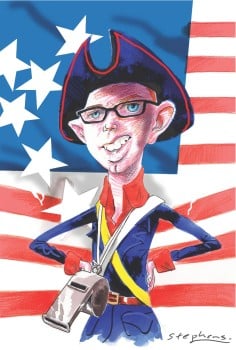
Few Americans in living memory have emerged from obscurity to become such polarising figures - admired by many around the world, fiercely denigrated by many in his homeland.
The contrasting portraits of Manning were summarised by his defence attorney, David Coombs, during the trial that culminated on Tuesday with Manning's acquittal on a charge of aiding the enemy and his conviction on charges of espionage, theft and computer fraud.
"Is Pfc. [private first class] Manning somebody who is a traitor, who has no loyalty to this country, or the flag?" Coombs had asked. "Or is he a young, naive, good-intentioned soldier who had human life, in his humanist beliefs, central to his decision?
"Which side of the version is the truth?" His supporters embraced the second of those versions, as illustrated by a full-page advert last week in The New York Times, headlined "WE ARE BRADLEY MANNING". The ad's 850 signatories included writer Alice Walker, activist intellectual Noam Chomsky, singer Joan Baez, and Daniel Ellsberg, the leaker of the Vietnam War-era Pentagon Papers who has praised Manning as a worthy heir to his legacy.