‘Ugly’ US$20 diamond reveals proof of water held deep within the earth
Geologists believe an 'ugly' US$20 stone offers proof that minerals retain liquid up to 660 kilometres beneath the surface of the planet
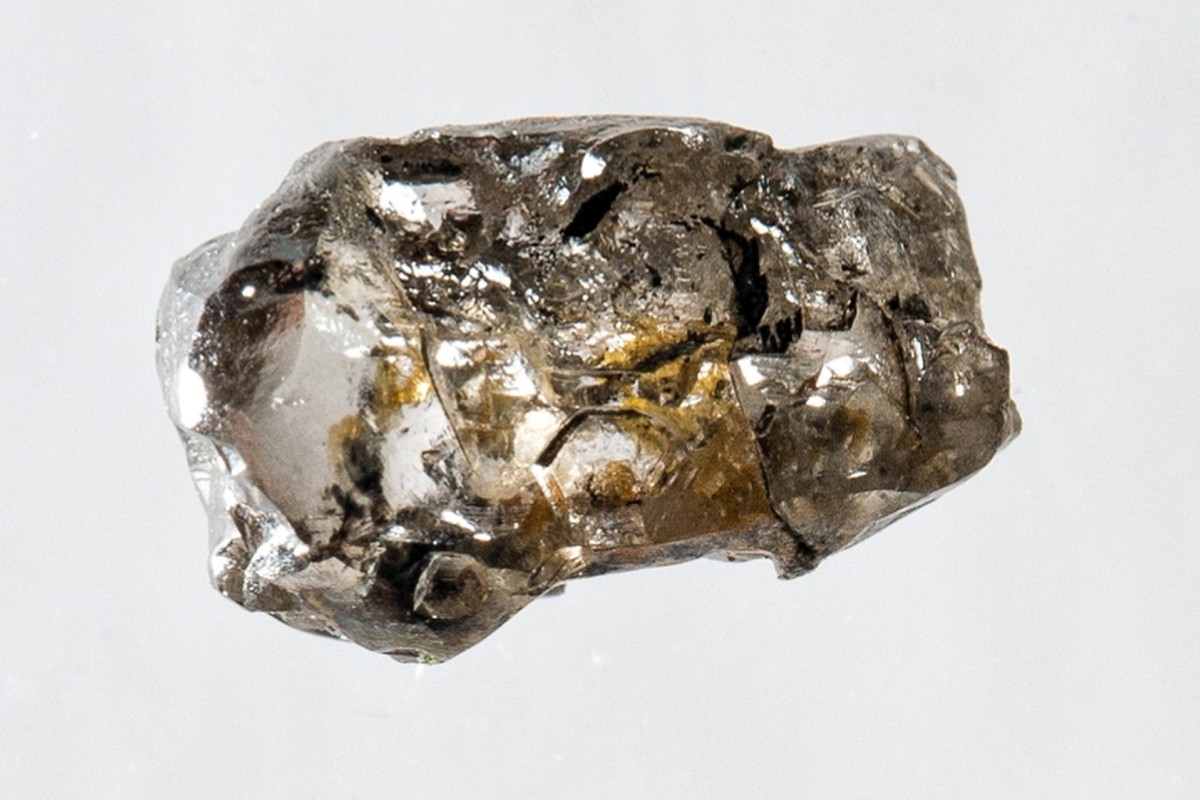
A small, battered diamond found in the gravel strewn along a shallow river bed in Brazil has provided evidence of a vast "wet zone" deep inside the earth that could hold as much water as all the world's oceans put together.
The water is not sloshing around inside the planet, but is held fast within minerals in what is known as the earth's transition zone, which stretches from 410 kilometres to 660 kilometres beneath the surface.
"It's not a Jules Verne-style ocean you can sail a boat on," said Graham Pearson, a geologist who studied the stone at the University of Alberta in Canada. The zone could transform scientists' understanding of how some of the earth's features arose.
Tests on the diamond revealed that it contained a water-rich mineral formed in the zone. Researchers believe that the gemstone, which is oblong and about 5mm long, was blasted to the surface from a depth of around 500 kilometres by an explosive volcanic eruption of molten rock called kimberlite.
The battle-scarred gem has a delicate metallic sheen, but is pitted and etched from its violent journey, which probably took several days and ended with the stone shooting up through the earth's crust at speeds of around 70km/h.
"It's a fairly ugly diamond. It looks like it's been to hell and back," said Pearson, adding that the gem is worth about US$20 at most. The stone was found in 2008 by artisan miners working the Juina riverbeds in Mato Grosso in western Brazil.