Infrared imagery reveals hidden depths to early Picasso masterpiece
Using infrared imagery, art experts have found another portrait underneath early masterpiece
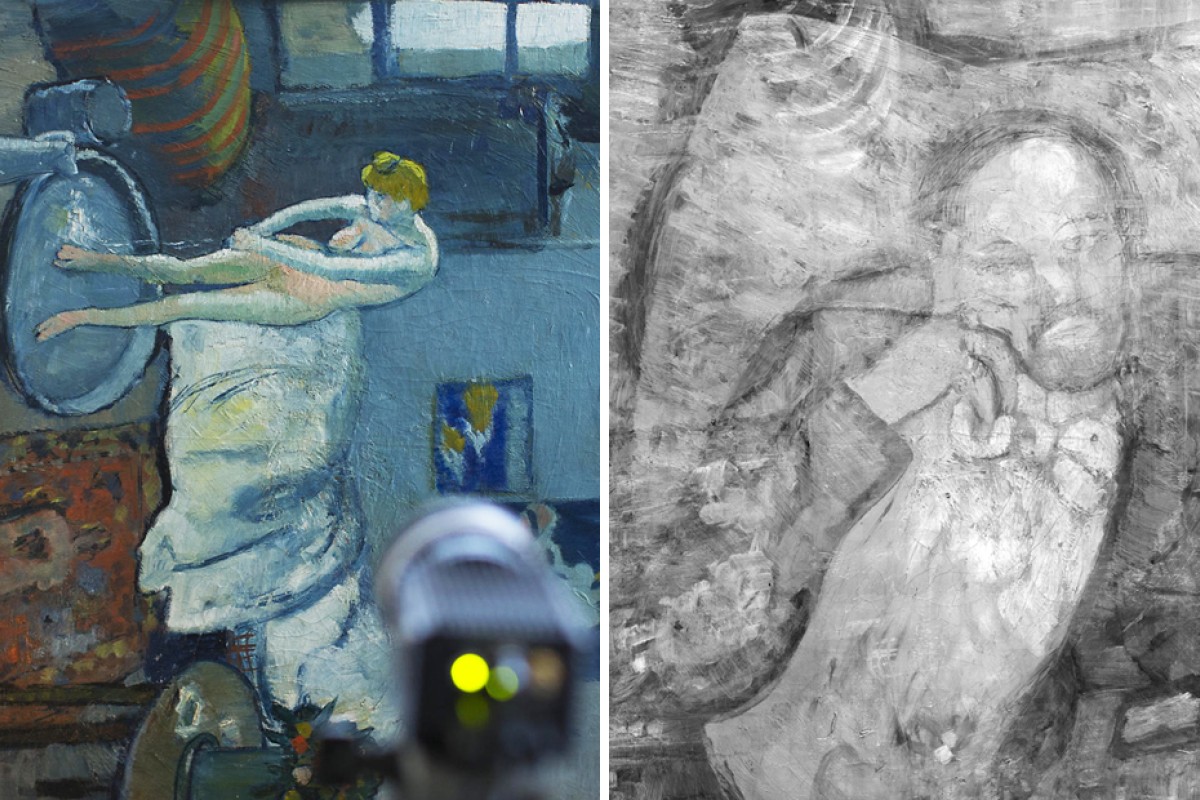
For Pablo Picasso, 1901 was a pivotal time to experiment and find his own unique style. At just 19 years old, he was living in Paris, painting furiously and dirt poor, so it wasn't unusual for him to take one canvas and reuse it to paint a fresh idea.
Now scientists and art experts are revealing they have found a hidden painting beneath the surface of one of Picasso's first masterpieces, The Blue Room.
Using advances in infrared imagery, they have uncovered a hidden portrait of a bow-tied man with his face resting on his hand.
Now the question that conservators at The Phillips Collection in Washington hope to answer is simply: Who is he?
It's a mystery that's fuelling new research about the painting created early in Picasso's career while he was working in Paris at the start of his distinctive blue period of melancholy subjects.
Curators and conservators revealed the discovery of the portrait for the first time last week.
Experts long suspected there might be something under the surface of The Blue Room, which has been part of The Phillips Collection since 1927. Brushstrokes on the piece clearly don't match the composition that depicts a woman bathing in Picasso's studio.