Nasa’s Messenger spacecraft will end its exploration of Mercury with a bang
4,100 orbits around planet closest to the sun led to unexpected insights
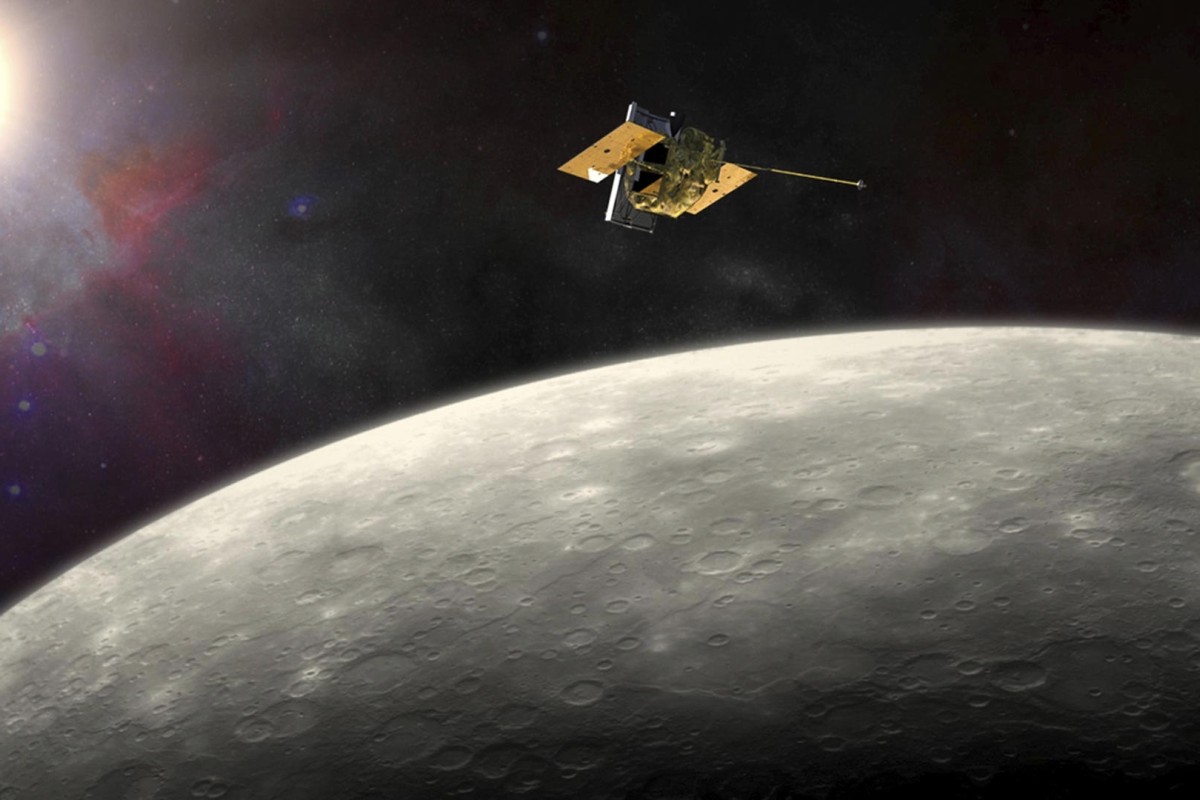
After more than four years of orbiting Mercury, Nasa's Messenger spacecraft is about to end its mission with a bang. After more than 4,100 orbits around the closest planet to the sun, the satellite will crash into Mercury's crater-pocked surface on April 30.
Nasa officials gave tribute in a briefing on Thursday to the Messenger spacecraft, which was the first to orbit Mercury and which they say has fundamentally altered our understanding of this scorched little world.
"The spacecraft and the instruments have worked virtually flawlessly over those four years," said James Green, director of Nasa's Planetary Science Division in Washington.
Launched in August 2004, the spacecraft has revealed many unexpected insights about that "first rock from the sun": that, even within scorching distance, it has reserves of polar ice holding frozen water; that organic matter also coats protected areas near the poles; and that the tiny planet has a strong but lopsided magnetic field.
Mercury is among the least-studied planets in our solar system. Messenger was the first mission since the Mariner 10's final fly-by in 1975 to study this planet up close.
With so little previously known about Mercury, Messenger has opened up a trove of new information - and several surprises - in its three fly-bys and four years of orbiting the planet, said Sean Solomon, the mission's principal investigator and director of Columbia University's Lamont-Doherty Earth Observatory in New York.