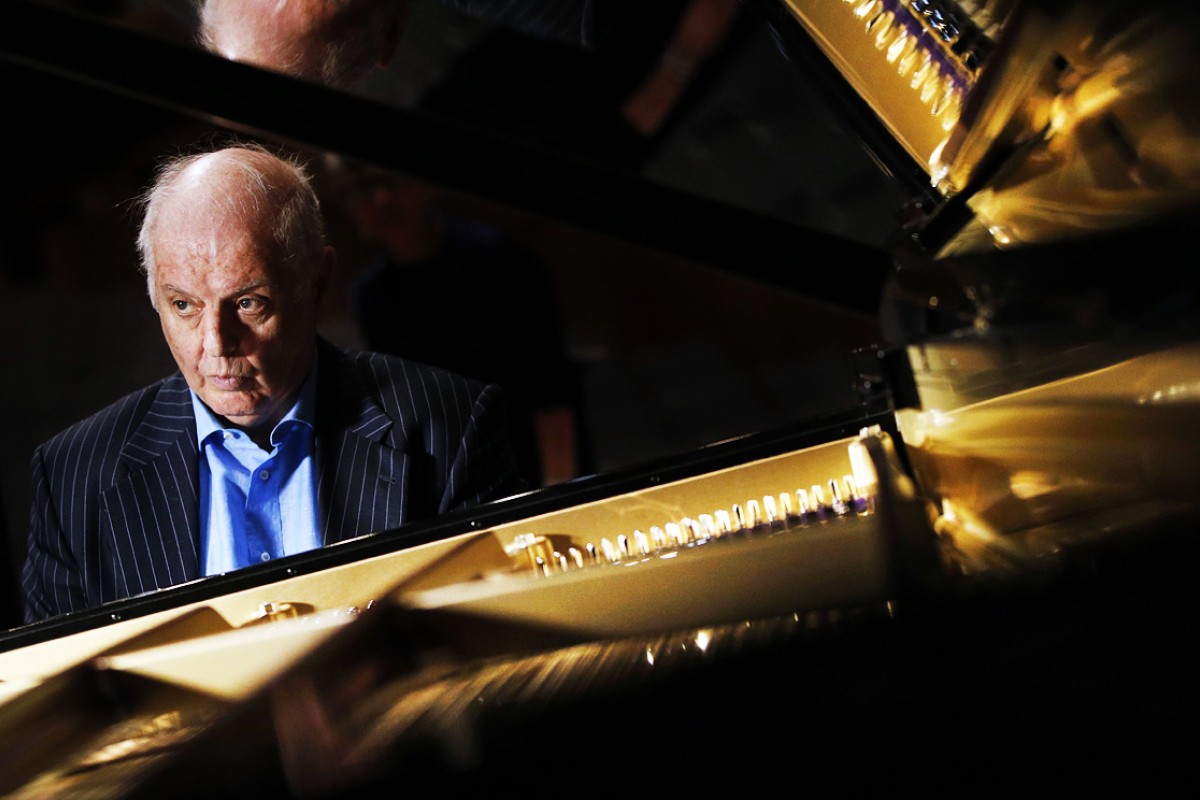
“I’ve fallen in love with it,” beamed Daniel Barenboim as he unveiled what he believes is a groundbreaking new piano, one which he conceived and commissioned, and has been dreaming about since 2011. “I want to spend as much time with it as possible.”
To a small audience of journalists, the maestro played 30 seconds from the slow movement of Beethoven’s Appassionata Sonata on his traditional Steinway before playing the same notes on his new piano.
Some were thrilled by the difference. Others furrowed their brows at the similarity. What no one could disagree on was the maestro’s passion for his new instrument.
Barenboim, 72, declared it a “sound alternative”. One piano was not better than the other but: “There is a difference in the quality of the sound ... it has more transparency, more clarity and by itself less blend but it gives you the opportunity to create a blend yourself as a player - and I like that.”
The exterior looks much the same as any other modern concert grand piano but inside there are some dramatic differences.
Designed by the Belgian instrument maker Chris Maene , the Barenboim has straight parallel strings instead of the diagonal-crossed ones of a contemporary piano. The wooden soundboard veins go in different directions. The bridges, ribs and bracings are specially-designed and the hammers and strings (yellow brass rather than red brass) have been repositioned.
All of this creates a piano which has a different sound and one which he has to play in a different way, he said. “It is a different relationship between the tip of the fingers and the key. And the pedalling ... the transparency of the sound makes you rethink the use of the pedals.”