
Could California’s long-dreaded “Big One” be triggered by a full moon?
Perhaps, says a new study out Monday that claims large earthquakes are more likely during high tides, which occur during full and new moons.
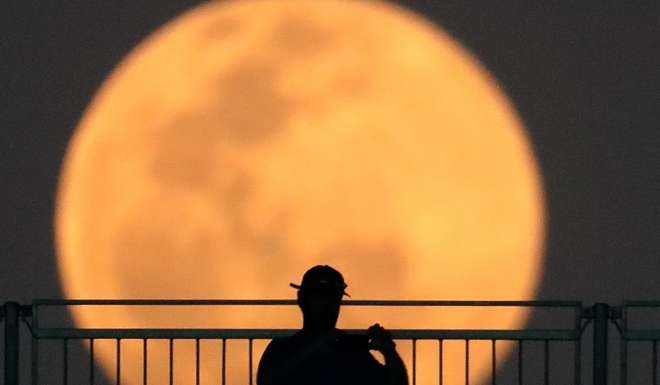
Ocean water is moved by the combined gravitational pull of the sun, moon and earth, which all line up in a row at high tide. Big quakes can occur when this added weight of tidal water strains geological faults, according to the study. Though this theory is not new, this is the first study to display a firm, statistical link.
“The probability of a tiny rock failure expanding to a gigantic rupture increases with increasing tidal stress levels,” the study said.

Precisely how large earthquakes occur is not fully understood, but scientists say they may grow via a cascading process where a tiny fracture builds up into a large-scale rupture. If so, the authors’ results imply that the likelihood of a small fracture cascading into a large earthquake are greater during high tides.