New crack in Antarctic shelf poised to create 5,300 sq km iceberg, 60 times size of Hong Kong island

Another branch has appeared in a huge crack on one of Antarctica’s largest ice shelves, and scientists fear it’s only a matter of time before a huge iceberg - potentially containing up to 5,200 sq km of ice - breaks away.
That’s about 60 times the size of Hong Kong Island. If this happens, the ice shelf may become increasingly unstable and could even fall apart.
Scientists have been closely monitoring the Larsen C ice shelf, located on the east coast of the Antarctic Peninsula, where a large rift in the ice - now about 180km long - has been advancing in rapid bursts in recent years. Between the beginning of December and the middle of January alone, the crack lengthened by about 27km. And since 2011, it has grown by about 80km.
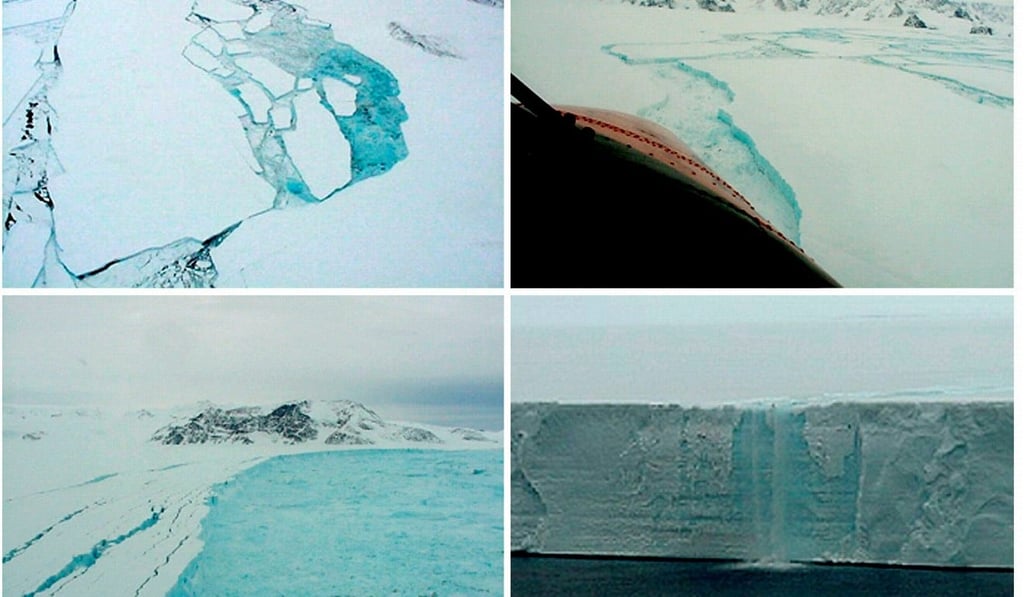
And now, scientists have noticed a worrying development: A new branch has split off from the main rift, about 10km below the tip of the original crack, and has splintered off in the direction of the ocean. The new branch is about 14km long. Altogether, only about 20km of ice now stand in the way of the whole chunk splitting off into the sea.
Researchers from Project Midas, a UK-based Antarctic research project based at Swansea University and Aberystwyth University, observed the new crack in satellite images on May 1.
The biggest concern is not whether the chunk will break off - that seems to be inevitable at this point - but what will happen after it does. The break will sweep away about 10 per cent of the ice shelf’s total area, and scientists have previously speculated that the shelf will become increasingly unstable after this point.