Nasa probe stares into the eye of the storm, with close-up look at Jupiter’s Great Red Spot

A Nasa spacecraft in orbit around Jupiter began transmitting data and images on Tuesday from humanity’s closest brush with the Great Red Spot, a flyby of the colossal, crimson storm that has fascinated Earthbound observers for hundreds of years.
The Juno probe logged its close encounter with Jupiter’s most distinctive feature on Monday evening Pacific time as it passed about 9,000km above the clouds of the mammoth cyclone.
But it will take days for readings captured by Juno’s array of cameras and other instruments to be delivered to scientists at the Jet Propulsion Laboratory (JPL) in Pasadena, California, and much longer still for the data to be analysed.
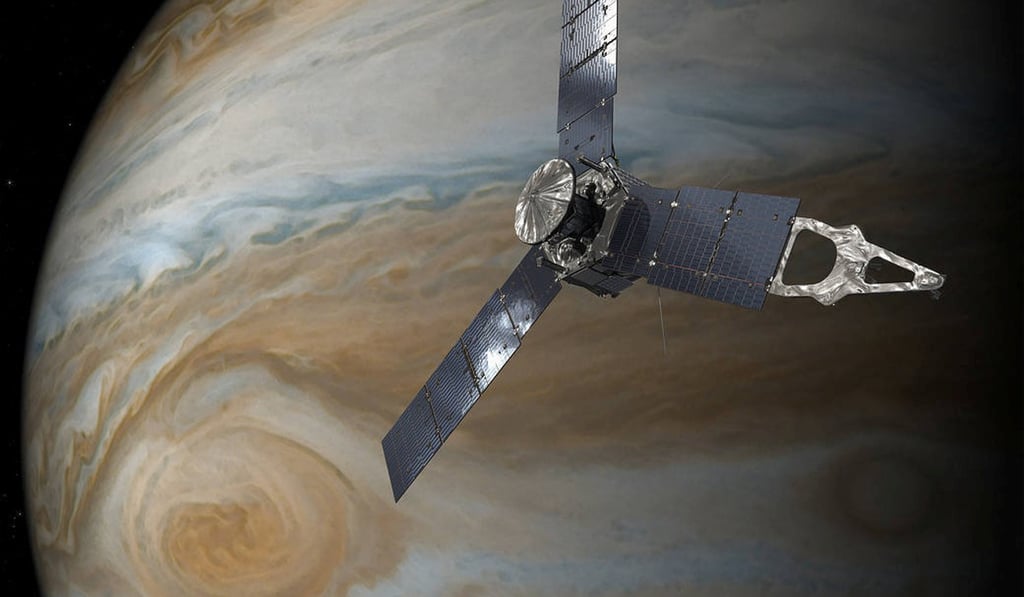
Astronomers also believe a greater understanding of the Great Red Spot may yield clues to the structure, mechanics and formation of Jupiter as a whole.
“This is a storm bigger than the entire Earth. It’s been there for hundreds of years. We want to know what makes it tick,” said Steve Levin, the lead project scientist for the Juno mission at JPL.