Salmon have a lousy problem, and the race to solve it is spanning the globe.
A surge of parasitic sea lice is disrupting salmon farms around the world. The tiny lice attach themselves to salmon and feed on them, killing or rendering them unsuitable for dinner tables.
Meanwhile, wholesale prices of salmon are way up, as high as 50 per cent last year. That means higher consumer prices for everything from salmon fillets and steaks to more expensive lox on bagels.
Advertisement
The blood-sucking lice are actually tiny crustaceans that have infested salmon farms in the US, Canada, Scotland, Norway and Chile, major suppliers of the high-protein, heart-healthy fish. Scientists and fish farmers are working on new ways to control the pests, which Fish Farmer Magazine stated last year costs the global aquaculture industry about US$1 billion annually.
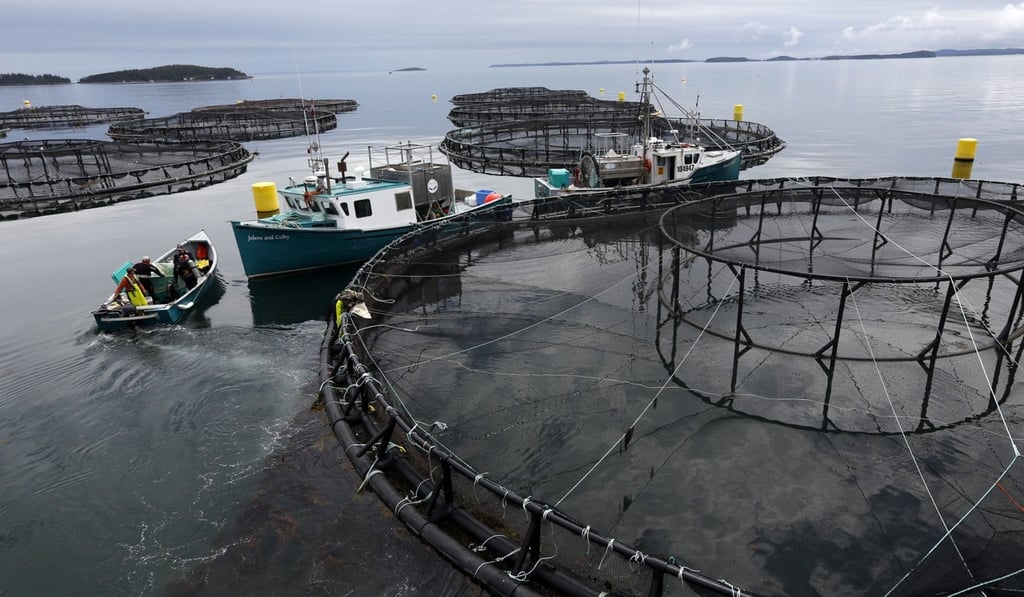
Workers position their boats at a Cooke Aquaculture salmon farm near Blacks Harbour, New Brunswick, Canada. Photo: AP
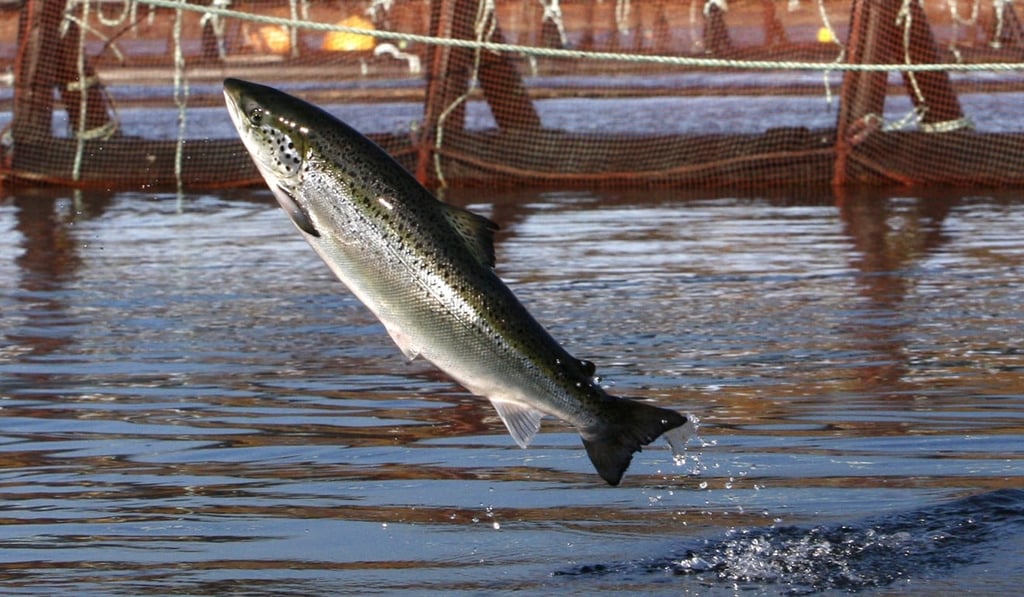
An Atlantic salmon leaps in a Cooke Aquaculture farm pen near Eastport, Maine. Photo: AP
So far it has been an uphill struggle that is a threat to a way of life in countries where salmon farming is a part of the culture.
Advertisement
“Our work has to be quicker than the evolution of the lice,” said Jake Elliott, vice president of Cooke Aquaculture in Blacks Harbour, New Brunswick.
Farmers worldwide consider sea lice the biggest threat to their industry and say the persistent problem is making the fish more expensive to consumers. Farmed salmon was worth nearly US$12 billion in 2015, according to the Food and Agriculture Organisation of the United Nations.
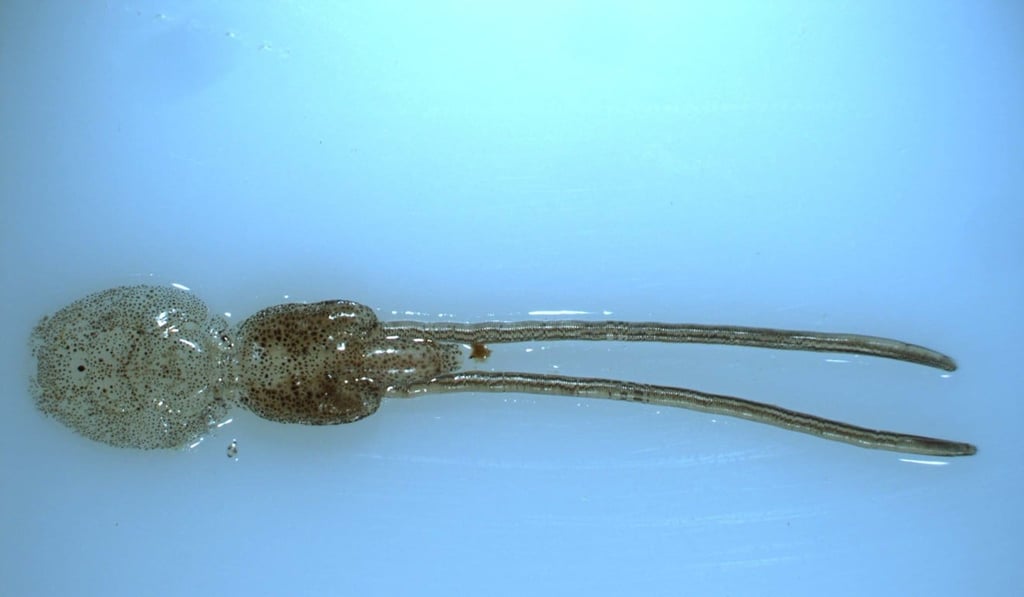
This undated photo provided by Cooke Aquaculture shows a sea lice. Photo: AP