Ripples from ancient black hole collision strike Earth, after travelling 1.8 billion light years

When two black holes merged 1.8 billion light years away, their violent union sent shock waves through space and time.
On August 14, three precisely tuned machines sensed the cosmic fallout from the ancient collision, a ripple known as a gravitational wave. August’s event marked the fourth time that astronomers have observed black hole collisions.
An international team of scientists announced the discovery on Wednesday from Turin, Italy, at a meeting of the G7 science ministers.
The science of hunting gravitational waves is old on paper and young in practice. Albert Einstein, through his General Theory of Relativity, predicted in 1916 that the waves should exist. It would remain a prediction for 98 years, until the LIGO Scientific Collaboration detected the first gravitational wave in September 2015.
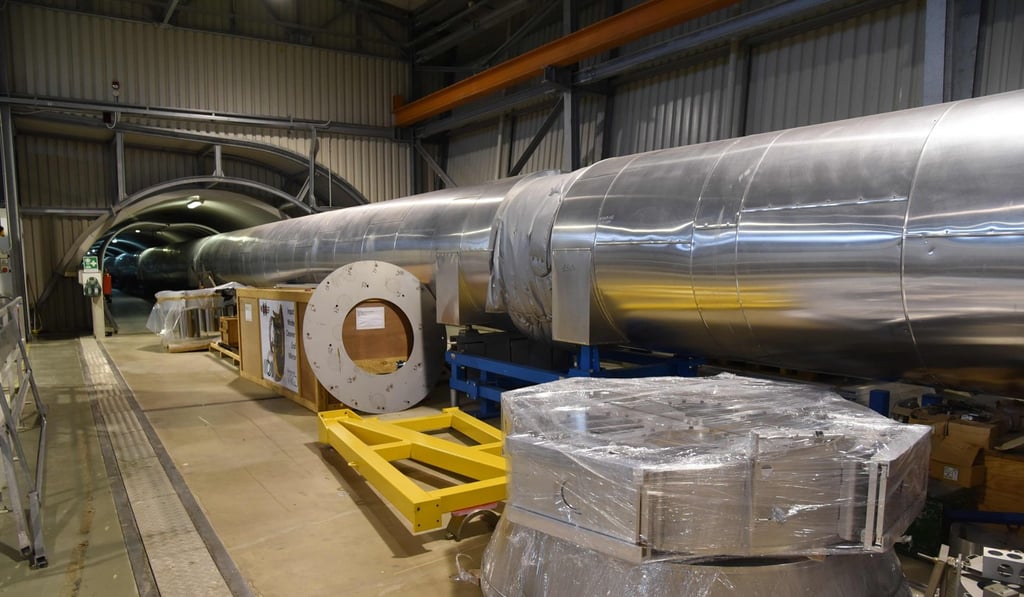
“LIGO and Virgo are the most sensitive instruments ever built by mankind,” said Jo van den Brand, a physicist and Virgo Collaboration spokesman, during the announcement. The detectors hear waves as a spike in frequency sometimes called a cosmic chirp. August’s chirp was the first signal detected by all three observatories.
Virgo was officially online for just two weeks when it detected the gravitational wave. Now that Earth’s three-detector network for sensing gravitational waves is operational, astronomers hope to zoom in on the source of the waves.