Advertisement
Environment
World

Alarm as Great Pacific Garbage Patch is 16 times bigger than expected, and expanding exponentially

The vast swirl of plastic debris, containing 1.8 trillion pieces of trash, is thought to have grown massively as a result of the 2011 Japanese tsunami

Reading Time:3 minutes
Why you can trust SCMP
This photo released on March 22 by the Ocean Cleanup shows a plastic garbage sample being collected by dredge in the Pacific in 2015. Photo: Agence France-Presse
Tribune News Service

The Great Pacific Garbage Patch is getting greater. Twice the size of France, the floating mass is up to 16 times larger than previously thought – carrying about 79,000 tonnes of plastic – according to scientists who performed an aerial survey.

The discovery, published in the journal Scientific Reports, reveals that this plastic blight in the Pacific Ocean is still growing at what the researchers called an “exponential” pace.
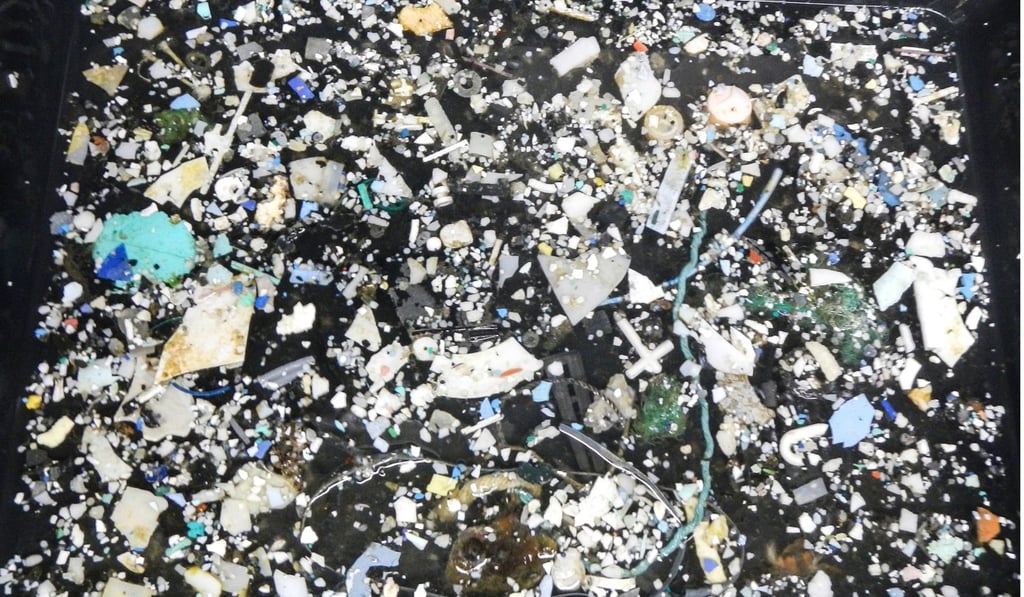
The Great Pacific Garbage Patch, or GPGP for short, is an accumulation of plastic products that has collected in the eastern Pacific Ocean between California and Hawaii. Much of it is hidden from the naked eye, partly because some of the plastic has been broken down into smaller and smaller bits over time. (It is not, as its name may suggest, an island.) The concentration of floating plastic in the patch ranges from tens to hundreds of kilograms per square kilometre.
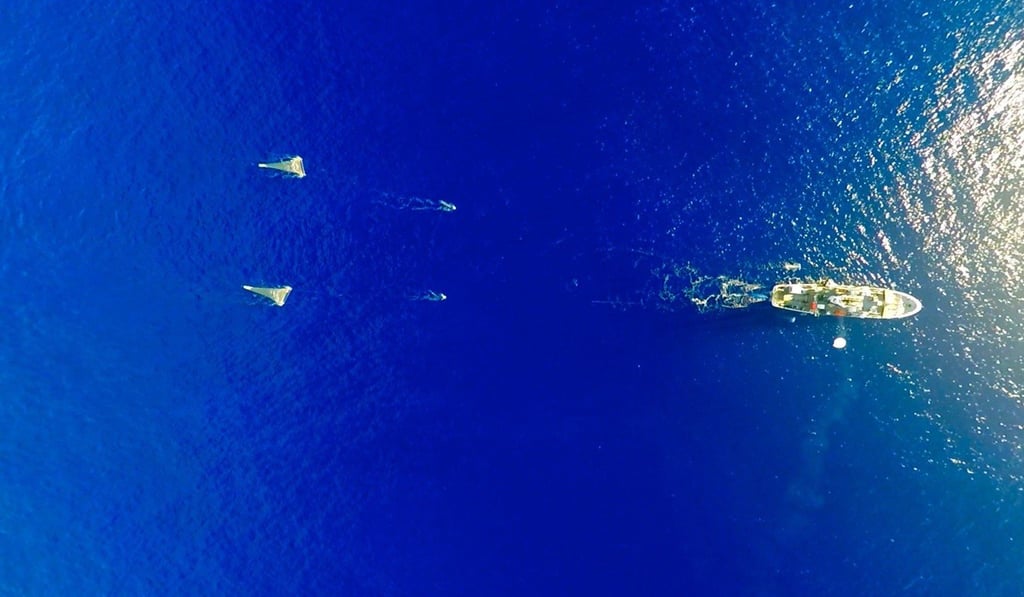
This handout photo released on March 22 by the Ocean Cleanup shows Mega Expedition mother ship R/V Ocean Starr in the Pacific Ocean in 2015. Photo: Agence France-Presse
Advertisement
A sampling of plastic from the Great Pacific Garbage Patch. Photo: Ocean Cleanup Foundation
“It’s quite frightening because we are so far from any mainland or island,” said lead author Laurent Lebreton, an oceanographer with the Ocean Cleanup Foundation based in the Netherlands. Out in the stretch of these blue seas, the plastic is a jarring reminder of human impact.

The GPGP is just one of many large garbage patches in the ocean, seeded and fed by humans manufacturing and quickly discarding plastic products. Plastics are meant to last, and that is great for carrying your groceries in thin bags or holding a six-pack. It’s not so great when those plastics end up in the guts of sea turtles or strangle birds. Recent studies show that biofouled plastic can attract fish and seabirds and end up in the food chain. While the full effects of this aren’t yet known, scientists worry that this can lead to malnutrition and other problems. Large or small, plastics of all sizes can harm ocean life.
Advertisement
Researchers have tried to get a handle on how big of a problem the GPGP is by dragging nets through parts of the patch and sampling the plastic they find. But this only gives a partial view. For one thing, even a team of boats can only see so much. For another, the net samplers they use are often too small to catch larger debris.
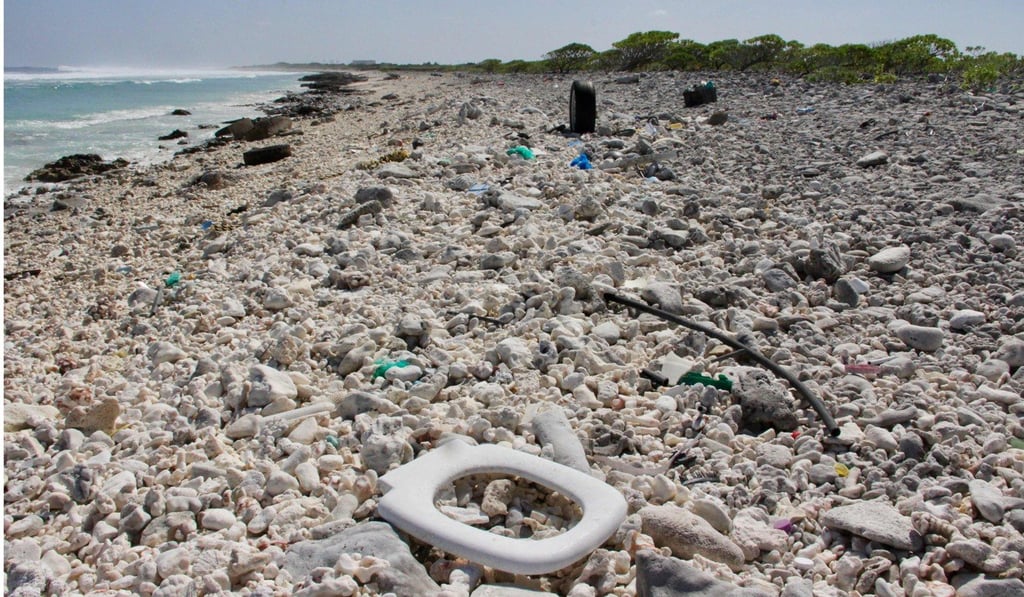
Plastic trash is seen strewn across a beach at Wake Island in the Pacific Ocean on February 2, 2018. Photo: Agence France-Presse

Lebreton and his colleagues decided to take a bird’s-eye view. They conducted aerial surveys of the patch while also sending boats to sample the debris and bring it all back to shore for analysis.

Advertisement
Select Voice
Choose your listening speed
Get through articles 2x faster
1.25x
250 WPM
Slow
Average
Fast
1.25x