Scientists trace path of ghostly neutrino particles striking Antarctica, from a black hole 3.7 billion light years away
‘One hundred billion neutrinos go through your thumbnail every second, but in all likelihood not a single one of them will ever hit an atom of your thumb in your lifetime’

A breakthrough in the study of ghostly particles called high-energy neutrinos that traverse space, zipping unimpeded through people, planets and whole galaxies, is giving scientists an audacious new way to expand our understanding of the cosmos.
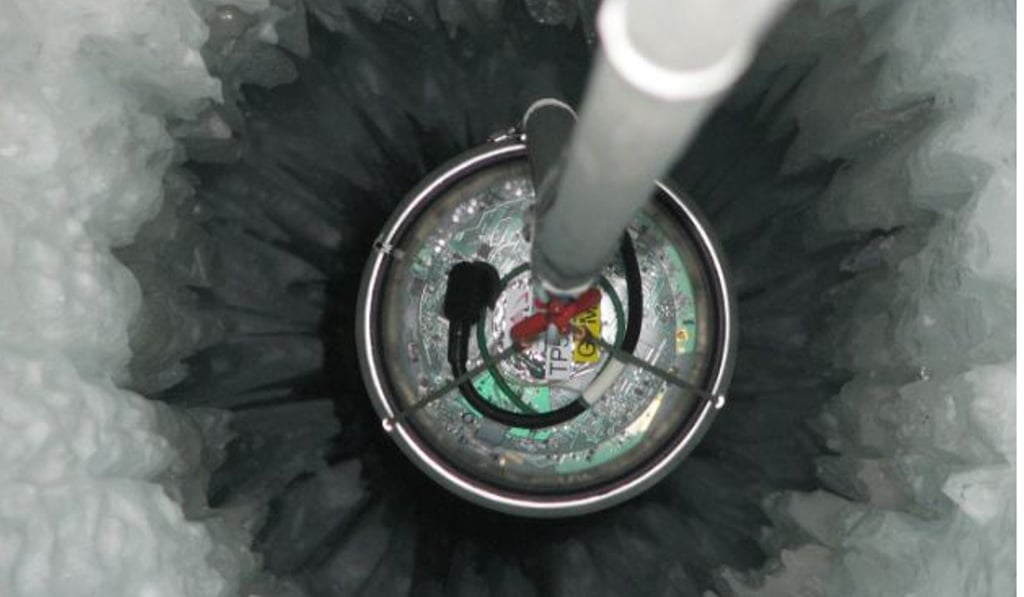
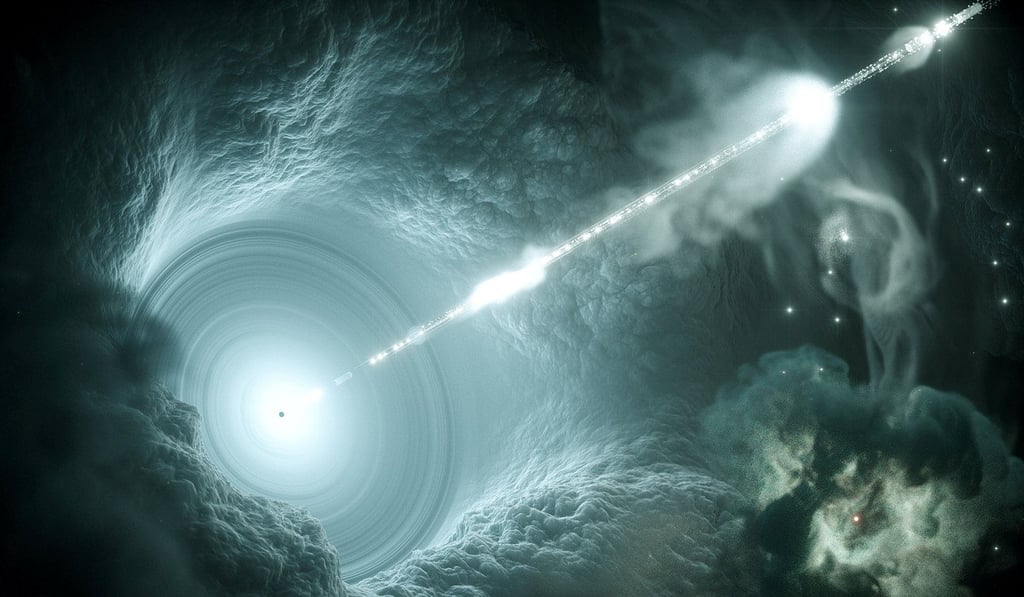
Researchers on Thursday said they have for the first time located a deep-space source for these ubiquitous subatomic particles. They detected high-energy neutrinos in pristine ice deep below Antarctica’s surface, then traced their source back to a giant elliptical galaxy with a massive, rapidly spinning black hole at its core, called a blazar, located 3.7 billion light years from Earth in the Orion constellation.
Astronomers long have relied upon electromagnetic observations – studying light – but this approach has limitations because too many aspects of the universe are indecipherable using light alone.
The ability to use particles like high-energy neutrinos in astronomy enables a more robust examination, much as the confirmation of ripples in the fabric of space-time called gravitational waves, announced in 2016, opened another new frontier in astronomy. This emerging field is dubbed “multi-messenger astrophysics.”
“Neutrinos provide us with a new window with which to view the universe,” said University of Alberta physicist Darren Grant, spokesman for the Ice Cube scientific collaboration. “In many ways neutrinos are nature’s ideal astronomical messenger. They can essentially escape their site of production and bring that information directly across the cosmos to their point of detection.”