Prehistoric gummy-mouthed whale that slurped down squid was the ‘mother’ of modern sea giants
- Fossils of toothless Maiabalaena nesbittae, that lived 33 million years ago, help explain how modern filter-feeding whales evolved

A prehistoric 4.5-metre-long (15-foot-long) toothless whale that sucked prey into its mouth represents a key missing puzzle piece concerning the evolution of today’s huge filter-feeding whales, scientists said on Thursday.
The researchers described fossils unearthed in Oregon of a whale named Maiabalaena nesbittae that lived 33 million years ago and possessed neither teeth nor baleen, the material that modern filter-feeding whales use to strain large amounts of tiny prey out of the water for food.
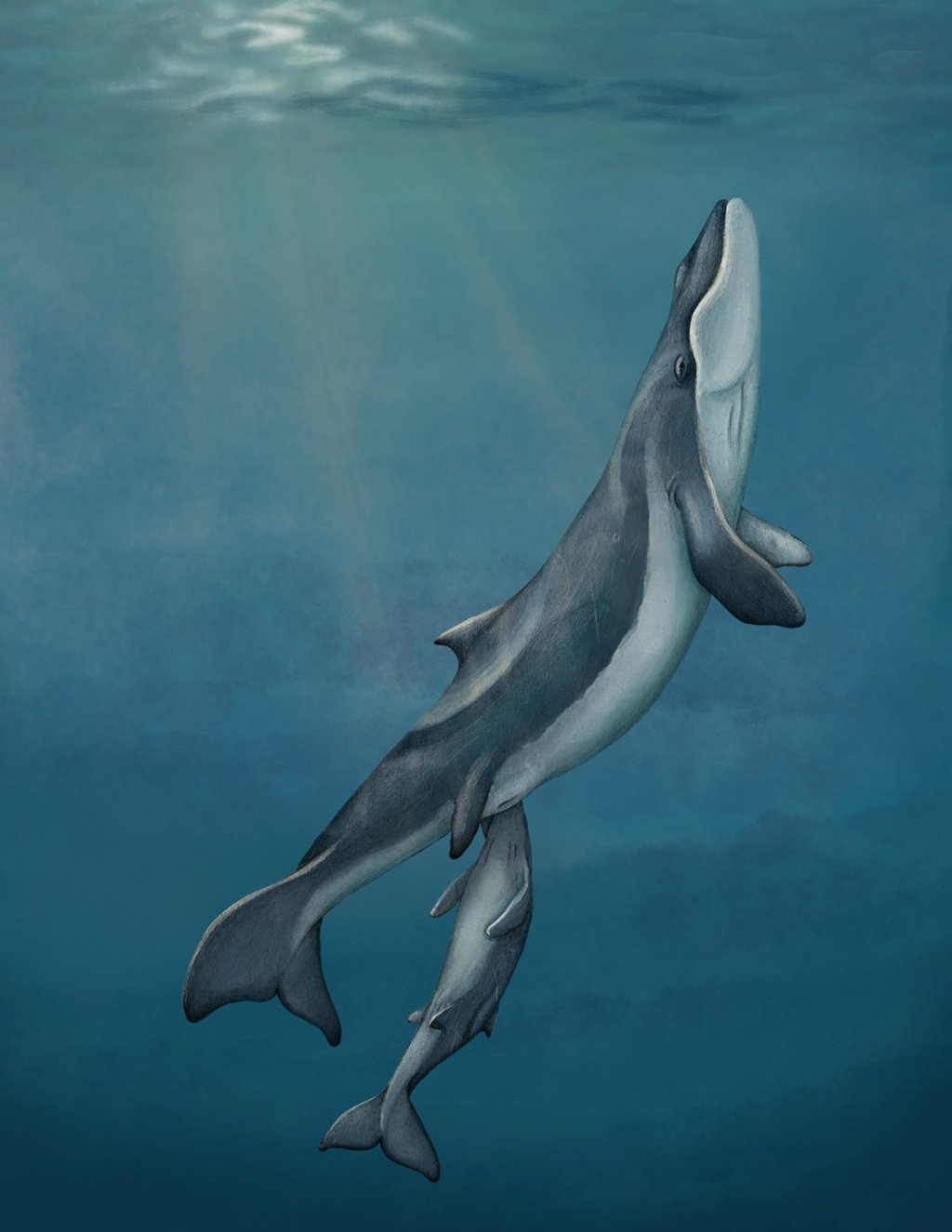
They called Maiabalaena, meaning “mother whale,” a surprising intermediate evolutionary stage between modern baleen whales and their toothed ancestors. Maiabalaena consumed fish and squid by sucking them into its mouth.
The evolutionary steps that led to modern baleen filter-feeding giants like the blue whale, Earth’s largest-known animal past or present, had remained unclear. Baleen is a flexible material made of keratin, the same stuff found in hair and fingernails.
Maiabalaena suggests that key evolutionary changes in the way that baleen whales feed, such as the loss of chewing, must have occurred before the innovation of filter feeding