What will happen to the handshake after Covid-19?
- Many people have refrained from shaking hands with others during the pandemic
- Other forms of greeting such as fist-bumping could become increasingly popular

Banished at the start of the pandemic, the handshake is making something of a comeback, thanks to vaccinations and the lifting of social restrictions – but “pressing the flesh” faces an uncertain future.
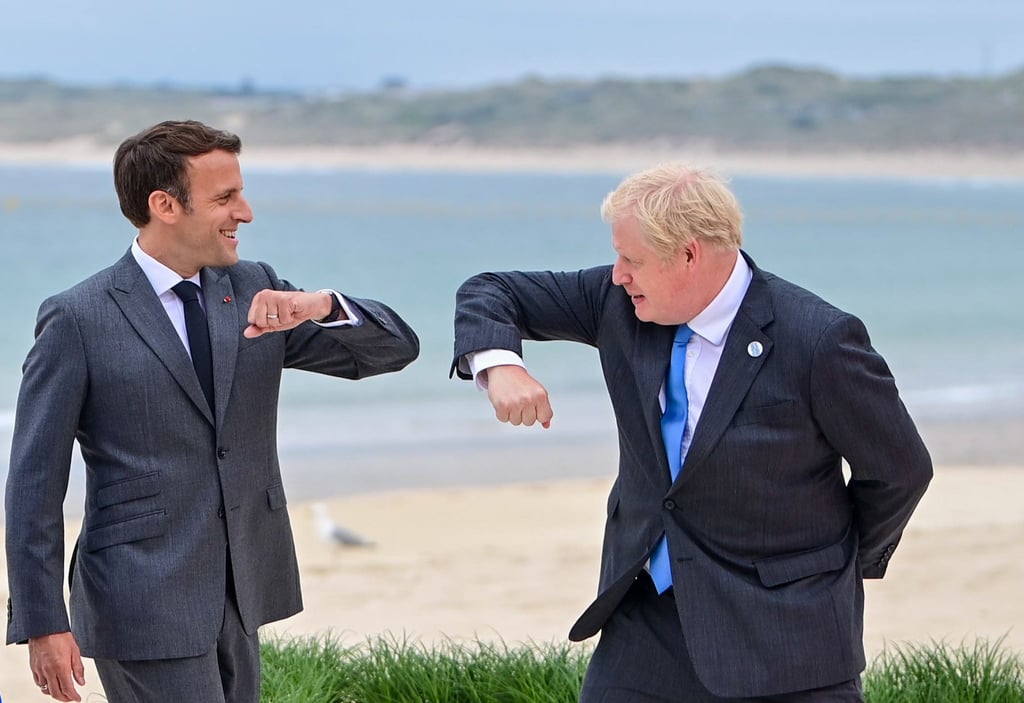
A few days earlier, at the G7 summit in Cornwall, Biden and his fellow leaders were still elbow-bumping away, at outdoor events spaced six feet apart.
Back in the United States, most Covid-19 restrictions have been lifted, and vaccinated citizens have been told they don’t need masks – even inside. Social distancing is largely a thing of the past, and unlimited domestic travel is back on.
But many Americans are still treading carefully – mask-wearing is still encouraged in many shops and offices, friends often greet each other with a brief wave, and handshakes are treated warily.
Some US companies and organisations are using coloured bracelets to allow employees, customers or visitors to signal their openness to contact: red, yellow or green, from the most cautious to the most comfortable.