Air-scrubbing machines: are they a serious tool in fighting climate change?
- Direct air capture plants suck air into big collection boxes where carbon dioxide accumulates on a filter
- A handful of companies operate such plants on a commercial scale; the largest is in Iceland
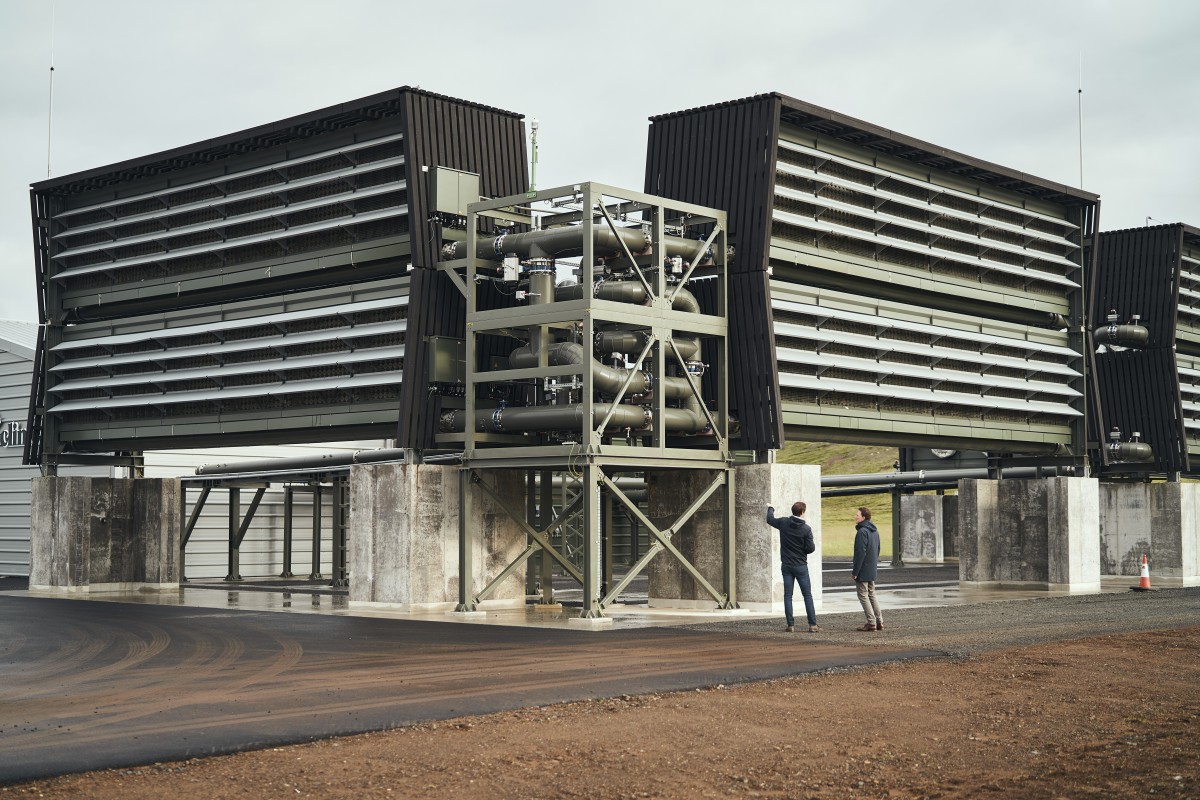
On a field ringed by rolling green hills in Iceland, fans attached to metal structures that look like an industrial-sized Lego project are spinning. Their mission is to scrub the atmosphere by sucking carbon dioxide from the air and storing it safely underground.
The Iceland plant, called Orca, is the largest such facility in the world, capturing about 4,000 metric tonnes of carbon dioxide per year. But compared to what the planet needs, the amount is tiny. Experts say 10 billion tonnes of carbon dioxide must be removed annually by mid-century.
“Effectively, in 30 years’ time, we need a worldwide enterprise that is twice as big as the oil and gas industry, and that works in reverse,” said Julio Friedmann, senior research scholar at the Centre on Global Energy Policy at Columbia University.
“We have already failed on climate to the extent to which direct air capture is one of the many things we must do,” Friedmann said. “We have already emitted so many greenhouse gases at such an incredible volume and rate that CO2 removal at enormous scales is required, as well as reduction of emissions.”