Nasa unveils new James Webb Telescope images that show ‘remarkable’ details of Jupiter
- Nasa said the images will give scientists more clues to discovering what Jupiter’s inner life is like
- Scientists hope to behold the dawn of the universe with the telescope – back to when the first stars and galaxies were forming 13.7 billion years ago

The James Webb Telescope has taken some of the clearest images beyond the Milky Way, but its most recent photos took a very detailed look at the king of our solar system – Jupiter.
The first image released is a collection of images taken from Jupiter against the darkness of space. The red and orange glow at the top and bottom of the planet show the auroras at the northern and southern poles, with green and yellow hazes swirling around. The rest of the enormous planet has blue shades to show light is reflected from a deeper main cloud, Nasa says.
One wide-field picture is particularly dramatic, showing the faint rings around the planet, as well as two tiny moons against a glittering background of galaxies.
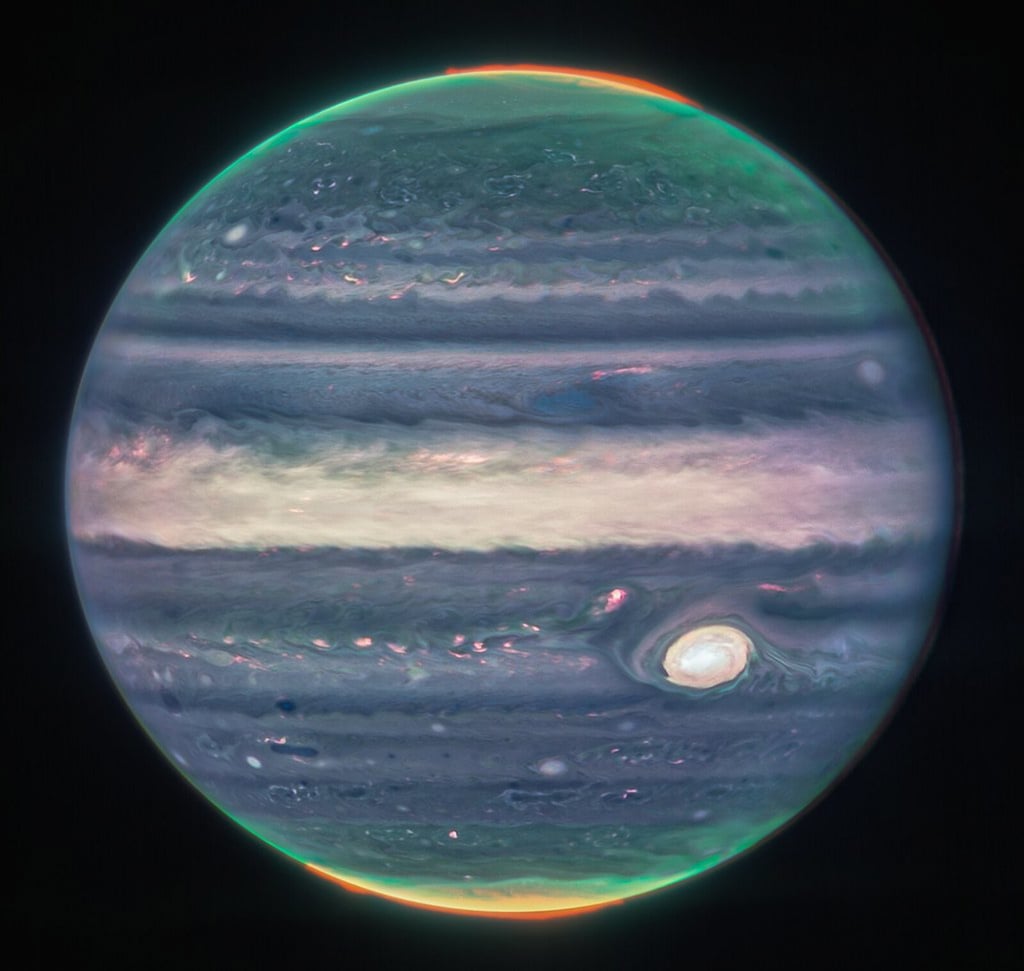
“We’ve never seen Jupiter like this. It’s all quite incredible,” said planetary astronomer Imke de Pater, of the University of California, Berkeley, who helped lead the observations.