COP27 puts climate compensation on agenda for first time
- COP27 President Sameh Shoukry says decision creates ‘an institutionally stable space’ for discussion of ‘the pressing issue of funding arrangements’
- Loss and damage discussions will not guarantee compensation or necessarily acknowledge liability, but intended to lead to a conclusive decision ‘no later than 2024’

For more than a decade, wealthy nations have rejected official discussions on what is referred to as loss and damage, or funds they provide to help poor countries cope with the consequences of global warming.
COP27 President Sameh Shoukry told the plenary that opens this year’s two-week United Nations conference attended by more than 190 countries the decision created “an institutionally stable space” for discussion of “the pressing issue of funding arrangements”.
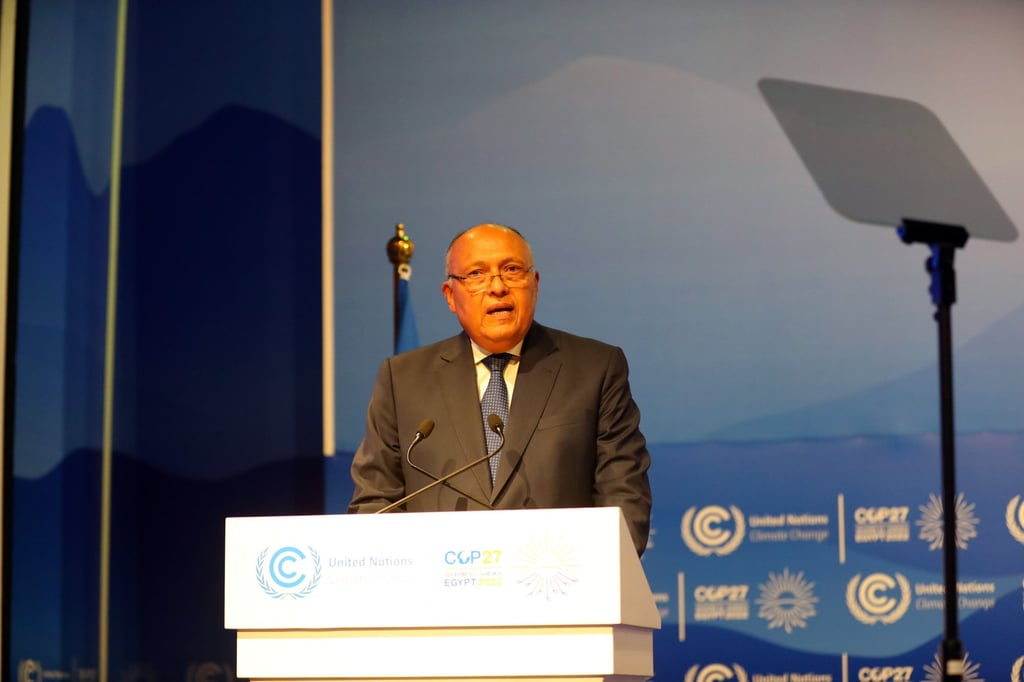
Inclusion of the agenda item “reflects a sense of solidarity and empathy for the suffering of the victims of climate induced disasters”, Shoukry added.
“We all owe a debt of gratitude to activists and civil society organisations who have persistently demanded the space to discuss funding for loss and damage,” he said to applause.
Shoukry also noted that rich nations had not fulfilled a separate pledge to deliver US$100 billion per year to help developing countries green their economies and build resilience against future climate change. He also lamented that most climate financing was based on loans.
“We do not have the luxury to continue this way. We have to change our approaches to this existential threat,” he said, calling for solutions that “prove we are serious about not leaving anyone behind”.