What’s eating Antarctica’s Doomsday Glacier? Skinny robot gives scientists a first look
- The pencil-shaped Icefin explored cracks in the Thwaites ice shelf, which got its nickname because of how much its collapse may contribute to rising sea levels
- The crevasses contribute to the fracturing of the ice, which takes the heaviest toll on the glacier, even more than melting

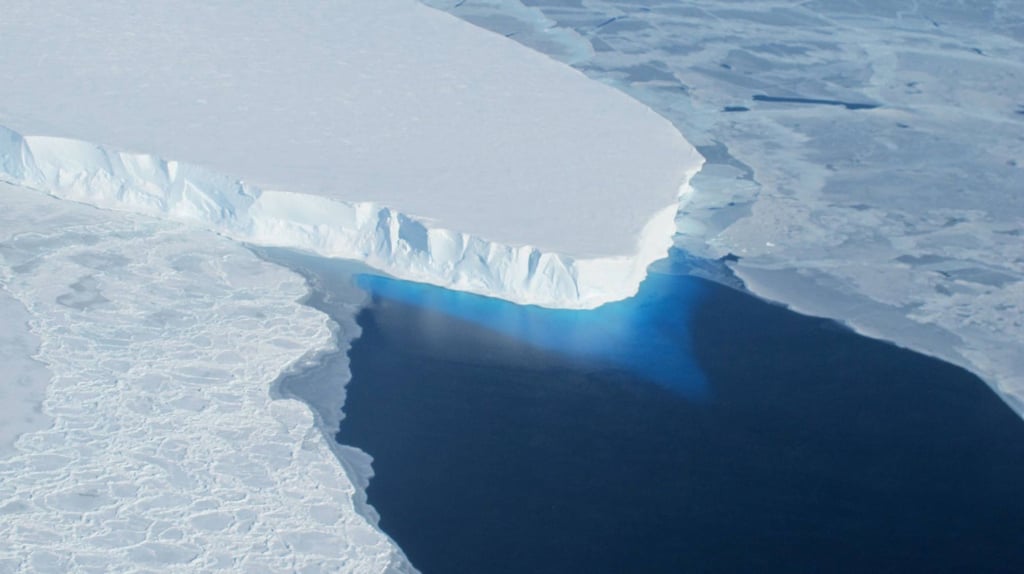
Scientists got their first up-close look at what is eating away part of Antarctica’s Thwaites ice shelf, nicknamed the Doomsday Glacier because of its massive melt and sea rise potential, and it is both good and bad news.
Using a four-metre (13-foot) pencil-shaped robot that swam under the grounding line where ice first juts over the sea, scientists saw a shimmery critical point in Thwaites’ chaotic break-up, “where it’s melting so quickly there, there’s just material streaming out of the glacier”, said robot creator and polar scientist Britney Schmidt of Cornell University.
Before, scientists had no observations from this critical but hard-to-reach point on Thwaites. But with the robot named Icefin lowered down a slender 587-metre hole, they saw how important crevasses are in the fracturing of the ice, which takes the heaviest toll on the glacier, even more than melting.
“That’s how the glacier is falling apart. It’s not thinning and going away. It shatters,” said Schmidt, lead author of one of two studies in Wednesday’s journal Nature.
That fracturing “potentially accelerates the overall demise of that ice shelf”, said Paul Cutler, the Thwaites programme director for the National Science Foundation who returned from the ice last week. “It’s eventual mode of failure may be through falling apart.”