New 3D map of Milky Way will ‘revolutionise astronomy’
Gaia satellite collects data on 100,000 stars every minute then sends it to Earth, where hundreds of scientists process it to produce the map

Europe’s Gaia satellite has produced a “stunning” 3D map, published on Wednesday, of more than a billion stars in our Milky Way galaxy, complete with their distance from Earth, their colour, and their motion through space.
The eagerly-anticipated catalogue was compiled from data gathered by Gaia on some 1.7 billion stars over 22 months in 2014-2016, from its unique vantage point in space about 1.5 million kilometres (930,000 miles) from Earth.
“The data set is very rich and we believe it will revolutionise astronomy and our understanding of the Milky Way,” Gaia’s scientific operations manager Uwe Lammers said. “This catalogue is the most precise, most complete catalogue that has ever been produced. It allows studies which have not been possible before.”
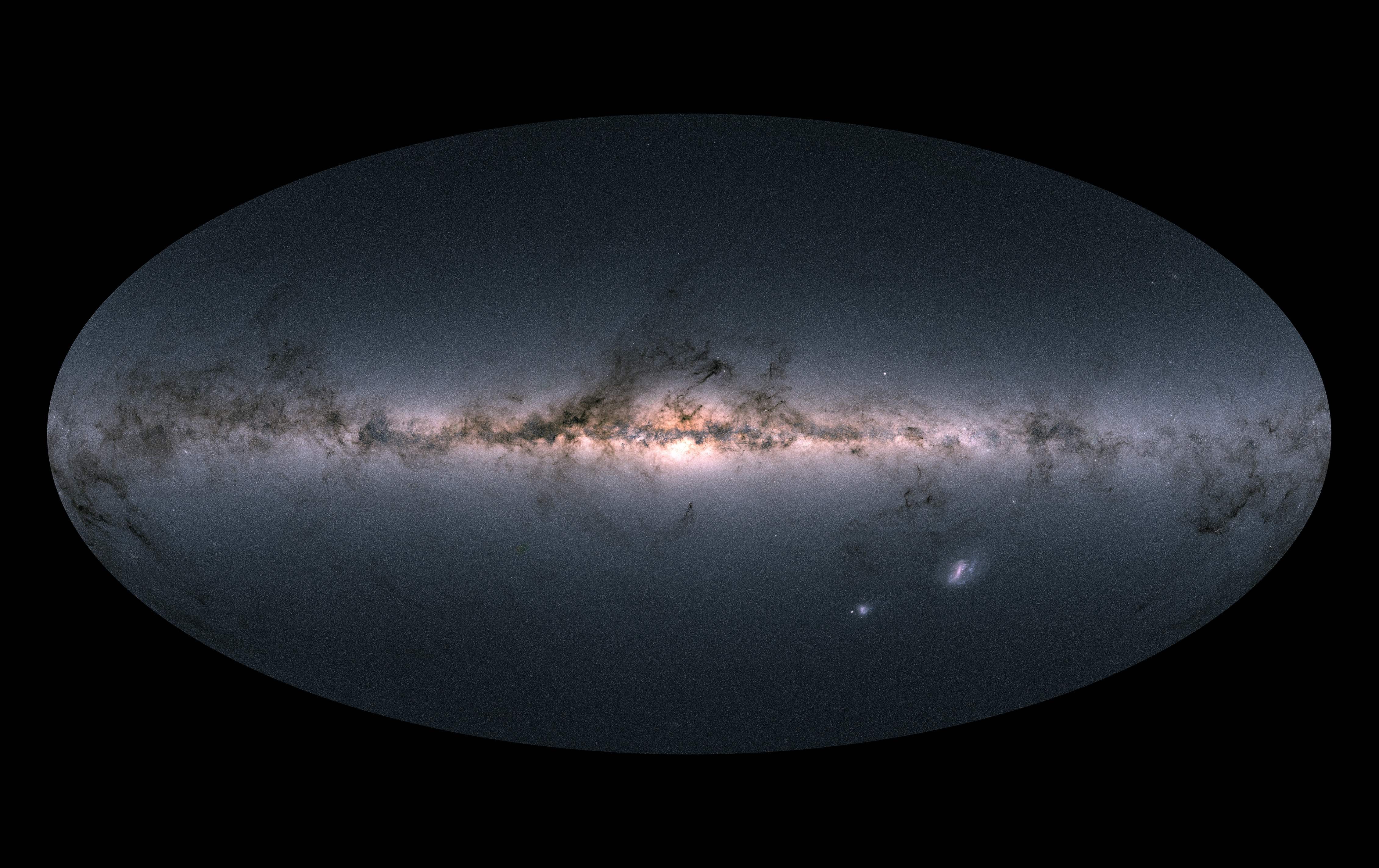
Launched in 2013, Gaia gathers data on about 100,000 stars per minute – some 500 million measurements per day. Its first map was published in September 2016, with about 1.15 billion stars.
An update, released at the ILA international air and space show in Berlin, adds stars and provides more data on each one. Some were measured as many as 70 times.