Advertisement
Germany
WorldEurope

Will time catch the Third Reich’s last war criminals before Germany’s Nazi hunters?

The spectacle of defendants in their 90s appearing in court to answer for crimes dating back to 1945 or earlier has renewed debate about the country’s dark history

3-MIN READ3-MIN
German prosecutor, head of Central Office of the Judicial Authorities of the Federal States for the Investigation of National Socialist Crimes, Jens Rommel stands in the archives room of the institution in Ludwigsburg, southwestern Germany. Photo: AFP
Agence France-Presse

Tucked away in the picturesque German city of Ludwigsburg, a tiny team of investigators tracks the last surviving Nazi war criminals across the globe and through the better part of a century, in an urgent race against time.

“We put together the smallest pieces of information, like the pieces of a puzzle, to work out who was employed in what role, from when until when” in Adolf Hitler’s totalitarian killing machine, says prosecutor Jens Rommel.

He has since 2015 led the eight-strong Central Office for the Investigation of National Socialist Crimes, at a time when the last perpetrators, accomplices, witnesses and survivors are finally vanishing.
Advertisement
Once all the perpetrators are gone, Germany will close the judicial side of its coming-to-terms with the Nazi government’s extermination of six million Jews and hundreds of thousands of others in the Holocaust.
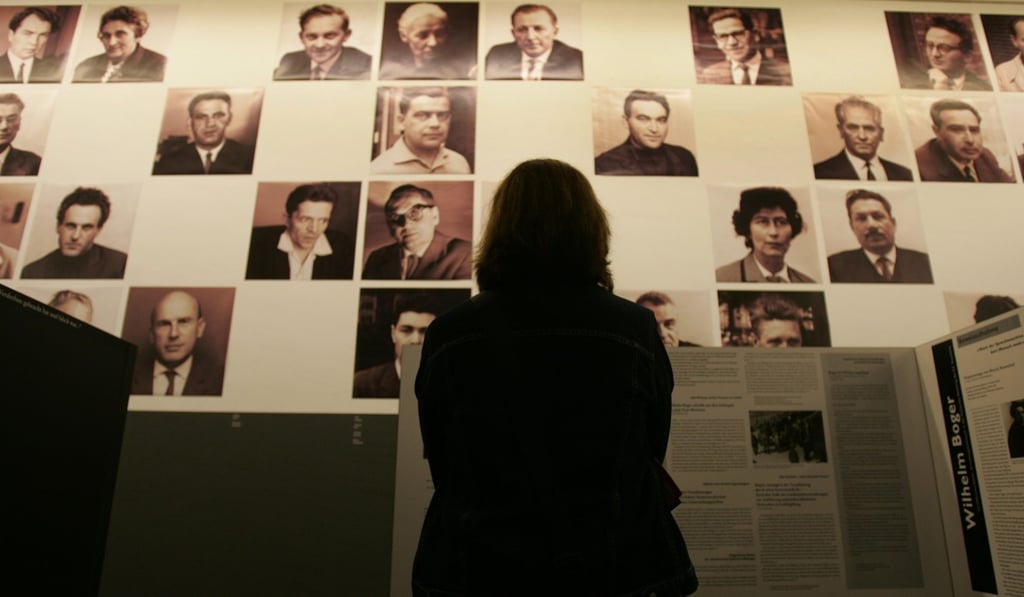
A visitor faces a wall of photographs depicting survivors of the Auschwitz concentration camp who testified in the so-called “Frankfurt Trial”, at the Martin Gropius Museum in Berlin, including previously unreleased sound recordings detailing the proceedings during which Nazi camp commanders at Auschwitz were finally put on trial. Photo: AFP

In the meantime, the spectacle of frail defendants aged in their 90s appearing in courtrooms to answer for crimes dating back to 1945 or earlier has renewed vigorous debate about the country’s dark history.

Advertisement

For decades after the war, the German government and justice system showed little haste to track down many of those involved in the organised mass murder.

Advertisement
Select Voice
Select Speed
1.00x