-
Advertisement
Nato
WorldEurope

Greece to expel Russian diplomats, accusing them of meddling in Macedonia deal to thwart Nato expansion

Russia is accused of trying to whip up opposition to an agreement on Macedonia’s name on both sides of the border, by bribing Greek Orthodox church leaders and orchestrating protests in Skopje

Reading Time:2 minutes
Why you can trust SCMP
A man wears a T-shirt with the lettering “Russia” and holds a picture with Macedonian national hero Goce Delcev in front of the parliament building in Skopje on June 23, during a protest against the new name of the country, the Republic of North Macedonia. Macedonia believes Russia is behind such protests, because the new name could pave the way for the Balkan nation’s membership of Nato. Photo: Agence France-Presse
The Guardian

Four Russian diplomats will be banned from Greece after evidence revealed Russia was trying to foment opposition to a historic deal between Greece and Macedonia that is likely to pave the way for Macedonia’s Nato membership and so weaken Russian influence in the western Balkans.

Greece said it would expel two Russian diplomats and ban two others.

Zoran Zaev, the Macedonian prime minister, speaking at the Nato summit in Brussels, indicated he knew Russia was behind some of the protests outside his own parliament in Skopje, but he said his country was not going to seek conflict. “We are a small country. We want to build a friendship with everybody. There is no alternative but Nato membership,” he said.
Advertisement
He said countries, such as Bulgaria, managed to triple foreign direct investment after joining Nato, and he hoped it would deliver the same boost to his country.
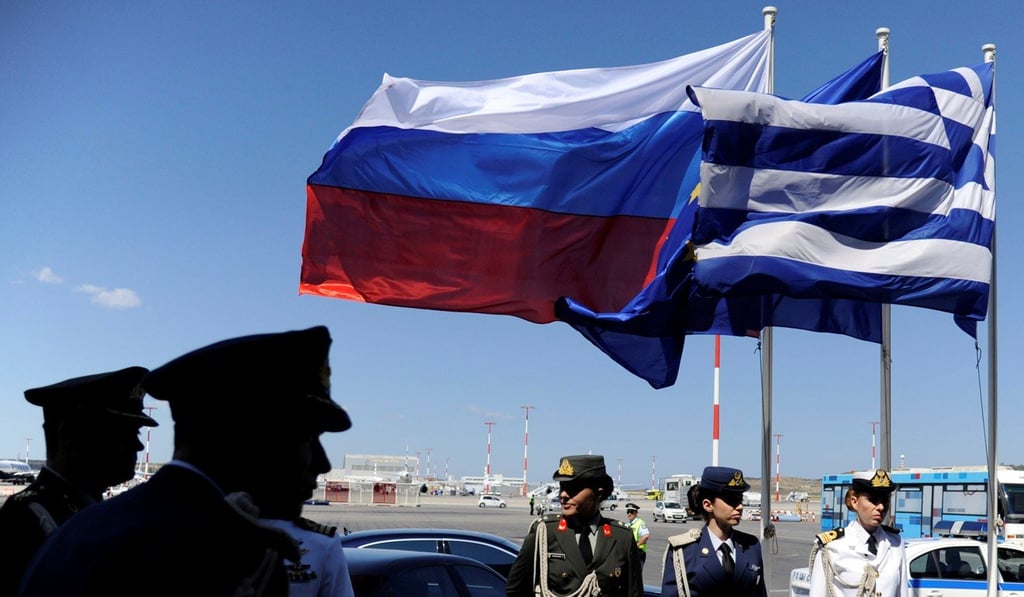
Greek police and army officers stand by Greek, Russian and EU flags as they wait for the arrival of Russian President Vladimir Putin in Athens in 2016. Photo: Reuters
Advertisement

Russia, involved in a wider struggle for influence with the EU across the region, has already been accused of backing a failed coup in Montenegro in 2016.

Advertisement
Select Voice
Choose your listening speed
Get through articles 2x faster
1.25x
250 WPM
Slow
Average
Fast
1.25x