Archaeologists find bizarre burial site of ‘Vampire of Lugnano’, a child ancient Romans feared would rise from the dead
A limestone rock was stuffed in the mouth of the dead child 1,500 years ago, surrounded by other ‘deviant’ graves

Inside a miniature tomb, in the middle of what used to be a sprawling Roman villa, is the skeleton of a 10-year-old child who died more than 1,500 years ago. It is on its side, its mouth agape and stuffed with a limestone rock about the size of a big egg.
Researchers believe the child, whose gender is still unknown, died after a deadly malaria outbreak afflicted the fifth-century community that once inhabited this tiny medieval town on a hill about 100km north of Rome. The stone had teeth marks, leading archaeologists to believe it had been deliberately inserted into the child’s mouth after death – a bizarre, ancient practice to keep the child from rising from the dead and spreading the disease.
Archaeologists have dubbed these types of burials “vampire burials.” Locals in the Italian town of Lugnano in Teverina call it the “Vampire of Lugnano.”
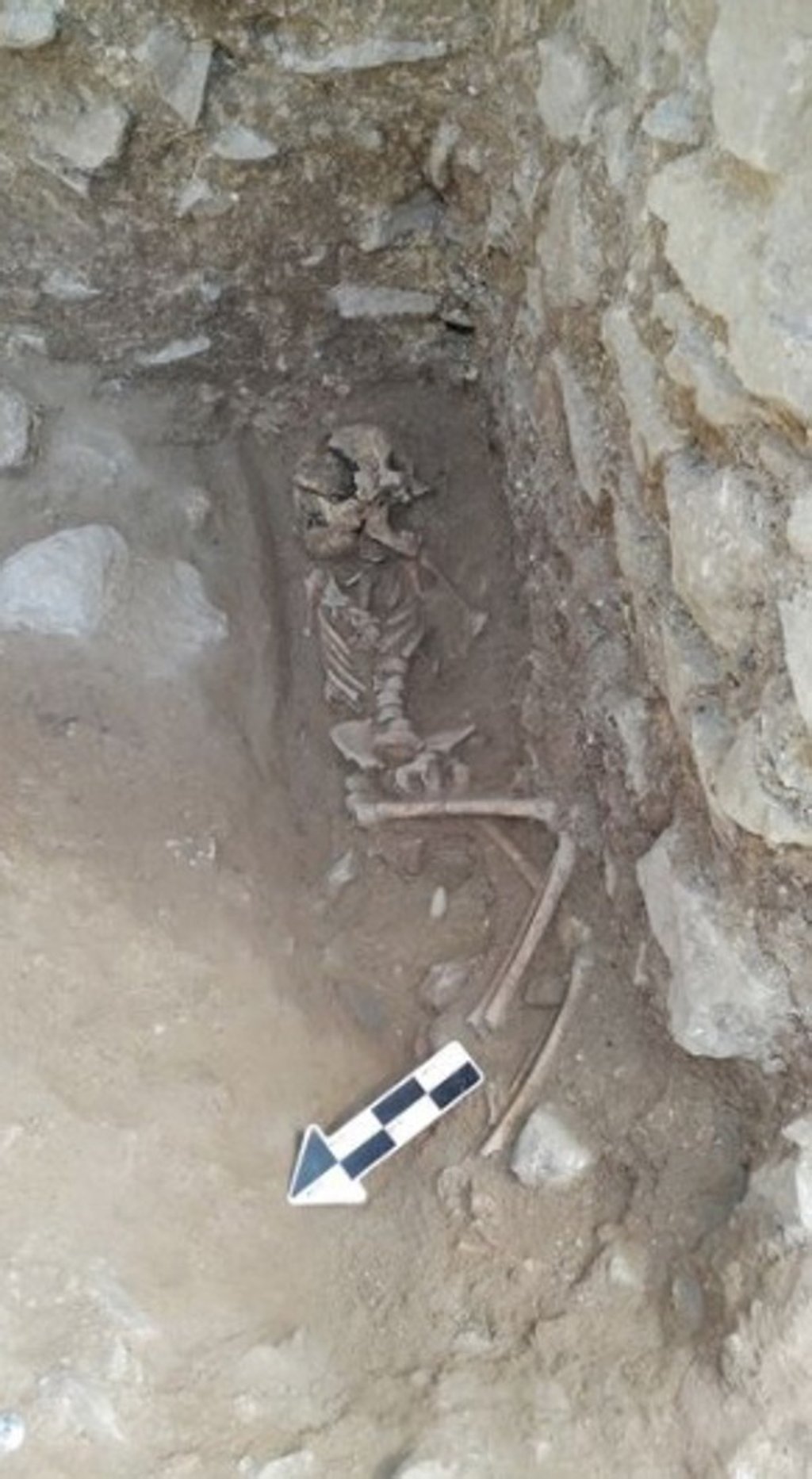
“We know that this kind of unusual treatment usually indicates a fear of the undead, specifically, a fear that the dead might come back from the grave to continue to spread diseases to the living … Placing the stone in the child’s mouth is a literal or symbolic way of incapacitating them,” said Jordan Wilson, a bioarchaeologist and a University of Arizona doctoral student who was part of the team that unearthed the remains in the summer.
It must have been a situation where you do not know what’s happening, you have no idea … where you’re almost trying anything in desperation and listening to whoever can come up with an answer. It’s just genuinely eerie
The discovery is the latest among several dozen remains that have been found at La Necropoli dei Bambini, or the Cemetery of the Babies, an abandoned Roman villa that was turned into a massive children’s graveyard sometime in the middle of the fifth century. A community on the cusp between paganism and Christianity, horrified by deaths they could not explain, resorted to witchcraft and buried their children through ritualistic means, said David Soren, a University of Arizona regents professor who has been overseeing archaeological excavations at the site in the last three decades.