Advertisement

How Greece’s torrent of fake cigarettes is costing the country millions

  • Over the past decade, sales of legally sold cigarettes have plummeted, while the share of illegal cigarettes rose to 23.6 per cent of total sales
  • The proliferation of knock-offs that often use inferior tobacco leaves has made Greece the counterfeit-cigarette capital of the European Union

Reading Time:3 minutes
Why you can trust SCMP
Greece has rapidly become the counterfeit-cigarette capital of the European Union. Photo: AFP

Just before midnight on a hot August evening in 2017, two police officers in an unmarked car in northern Greece’s largest city, Thessaloniki, stopped a truck for what looked like a routine check.

In the back of the truck, the two officers and the 15 others who joined them found piles of counterfeit cigarettes, leading to one of the biggest hauls of fake smokes in Greece. The search was the culmination of an eight-month-long surveillance of an illegal cigarette factory near Athens and a carefully laid dragnet involving more than 80 police personnel working practically around the clock. The authorities seized 178 million counterfeit cigarettes and more than 18,000 rolling tobacco packs.

Efforts to arrest counterfeiters have accelerated, with police now targeting products that go into the manufacturing of such contraband. This month, they seized 128 tonnes of tobacco from a warehouse in Viotia, north of Athens, that would have produced some 604 million counterfeit cigarettes.
Advertisement
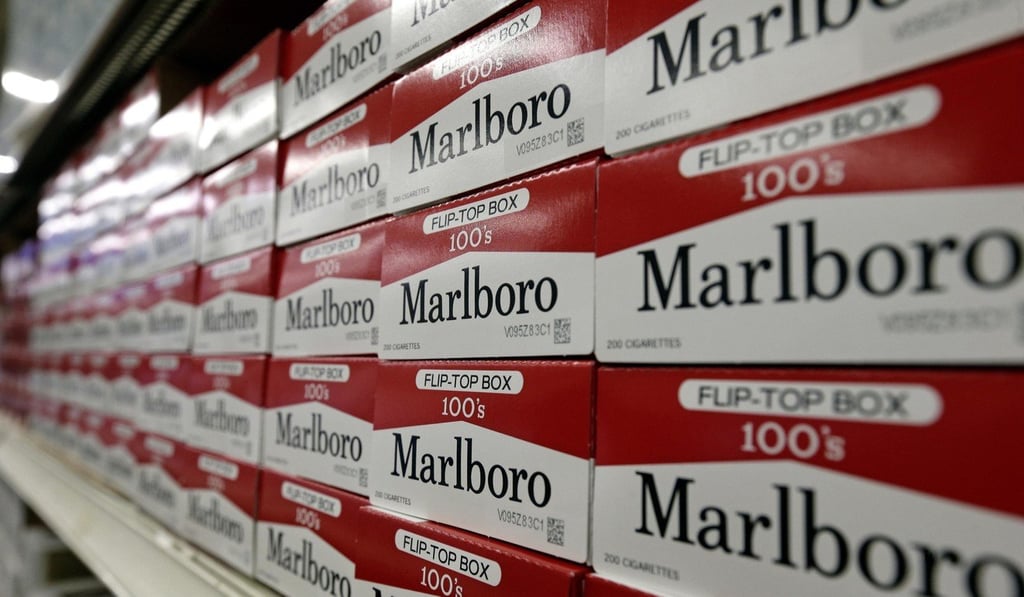
The proliferation of fake versions of well-known labels from Marlboro and Muratti to Business Royals that often use inferior tobacco leaves and can be bought on street corners for as little as 1.50 euros (US$1.66) a pack – less than half the price of the real thing – has made Greece the counterfeit-cigarette capital of the European Union.
Fake versions of well-known brands such as Marlboro have proliferated in Greece. Photo: AP
Advertisement

In 2018, Greece lost 700 million euros (US$773 million) from the illicit trade in cigarettes and tobacco, according to a KPMG report, an amount that could have helped the country avoid a number of pension cuts during its three international bailout programmes. Pensioners were asked to take a 740 million-euro hit last year to bolster the country’s social security system.

As Greece’s new Prime Minister, Kyriakos Mitsotakis, seeks to make good on his campaign promise to ease the country’s tax burden, cracking down on such illicit activities is becoming critical. Plugging tax leakages will give him the fiscal space he needs to lure investors with lower levies and also reverse some of the austerity measures introduced during the crisis.
Advertisement
Select Voice
Choose your listening speed
Get through articles 2x faster
1.25x
250 WPM
Slow
Average
Fast
1.25x