Advertisement
Germany’s far-right on the rise, finishing strong second in state elections
- Alternative for Germany took around a quarter of the vote on Sunday, reflecting its establishment as a major political force
- It remains uncertain whether Chancellor Angela Merkel’s struggling coalition can survive until the next national election, due in 2021
Reading Time:3 minutes
Why you can trust SCMP

Germany’s governing parties have staved off another crisis for now with wins in two state elections in the country’s east, but a far-right opponent that surged to finish a strong second savoured the prospect of harrying mainstream rivals in its heartland on Monday.
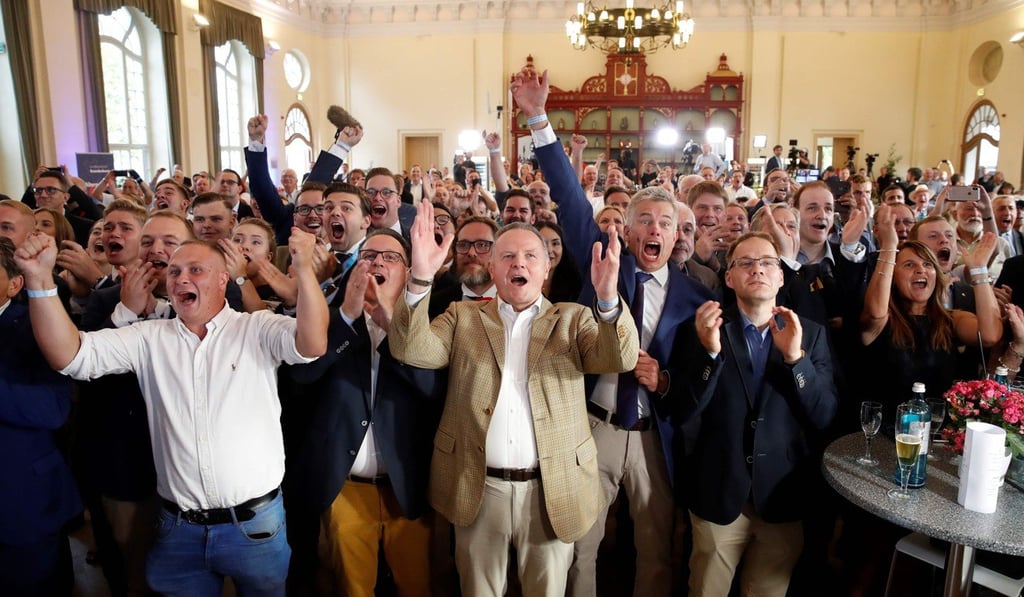
Alternative for Germany, or AfD, proclaimed that it cannot be frozen out of power forever after it nearly tripled its support in Saxony and almost doubled it in neighbouring Brandenburg on Sunday compared with five years earlier.
Advertisement
The far-right AfD took around a quarter of the vote between the two states, reflecting its establishment as a major political force – particularly in the ex-communist east – after the 2015 migrant influx.
But it fell short of beating the traditional parties that have governed those regions since German reunification in 1990, a possibility that seemed likely a few weeks ago and could have further destabilised Chancellor Angela Merkel’s struggling coalition government in Berlin.
Advertisement
It remains uncertain whether her alliance will survive until the next national election, due in 2021. That is likely to become clear only in December, when the centre-left Social Democrats – Merkel’s junior partners in Berlin – finish choosing a new leadership from a 17-candidate field and mull the alliance’s future.
Advertisement
Select Voice
Select Speed
1.00x