Scientists puzzled by really big planet orbiting really little star
- Solar system discovered 30 light years from Earth defies current understanding about planet formation

Scientists are expressing surprise after discovering a solar system 30 light years away from Earth that defies current understanding about planet formation, with a large Jupiter-like planet orbiting a diminutive star known as a red dwarf.
Stars generally are much bigger than even the largest planets that orbit them. But in this case, the star and the planet are not much different in size, the researchers said on Thursday.
The star, called GJ 3512, is about 12 per cent the size of our sun, while the planet that orbits it has a mass of at least about half of Jupiter, our solar system’s largest planet.
“Yes, an absolute surprise,” said astrophysicist Juan Carlos Morales of the Institute of Space Studies of Catalonia at the Institute of Space Sciences in Spain, who led the research published in the journal Science.
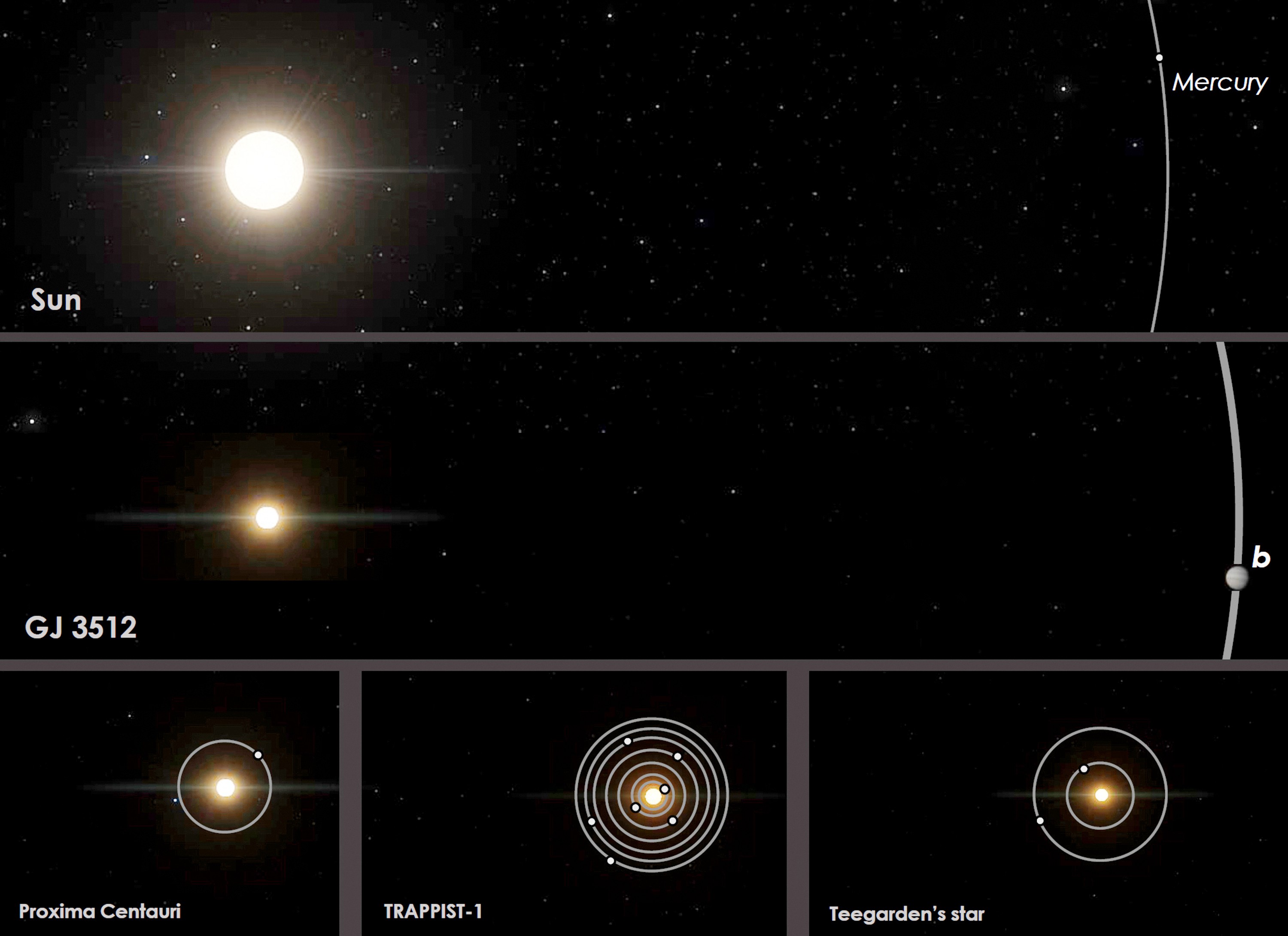
“The discovery was surprising because theoretical formation models suggest that low-mass stars typically host small planets, similar to Earth or small Neptunes. In this case, we have found a gas giant planet similar to Jupiter around a very small star,” Morales added.
The planet, which like Jupiter is composed mainly of gas, was discovered using a telescope at the Calar Alto Observatory in Spain. It travels around its star in a very elliptical orbit lasting 204 days.