‘Naturally fatty’ foie gras cooked up by French scientists
- French scientists developed an alternative version that uses bacteria – ingested by the goose as a serum – to stimulate a natural build-up of fat

In a barn in southwest France, farmer Valerie Fosserie squirts serum into a gosling’s mouth as a prelude to what she says is production of the world’s first ethically friendly foie gras.
The delicacy, long a feature on the menu of gourmet restaurants across the globe, is made by force-feeding geese to turn their livers to fat, a process long denounced as cruel by animal rights activists and increasingly viewed with unease by authorities in some western cities.
In October, New York City, often considered the US fine dining capital, prohibited the sale of foie gras, following similar bans in Chicago and the state of California.
In response, French scientists at research company Aviwell near Toulouse have developed an alternative version of the delicacy that uses bacteria – ingested by the goose as a serum – to stimulate a natural, rather than forced, build-up of fat.
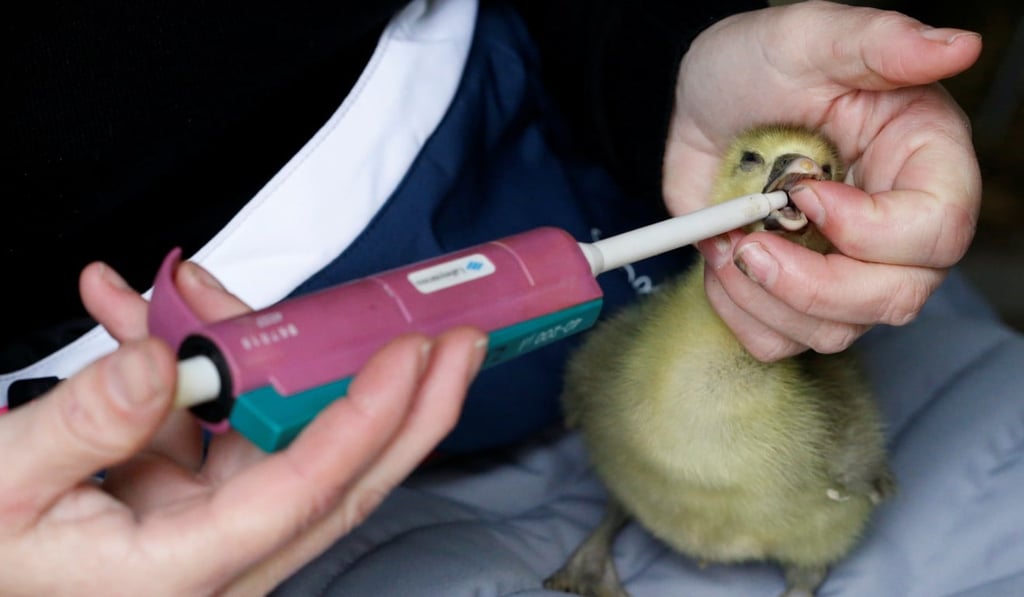
“It’s the combination of certain bacteria that is capable of triggering in baby geese the natural composition, and completely biological growth, of fat in the liver,” company co-founder Remy Burcelin said.
Aviwell raised 600 geese when it launched its project last year, and Fosserie has now become the first foie gras farmer to adopt the technique, which also doubles the birds’ average lifespan from three to six months.